
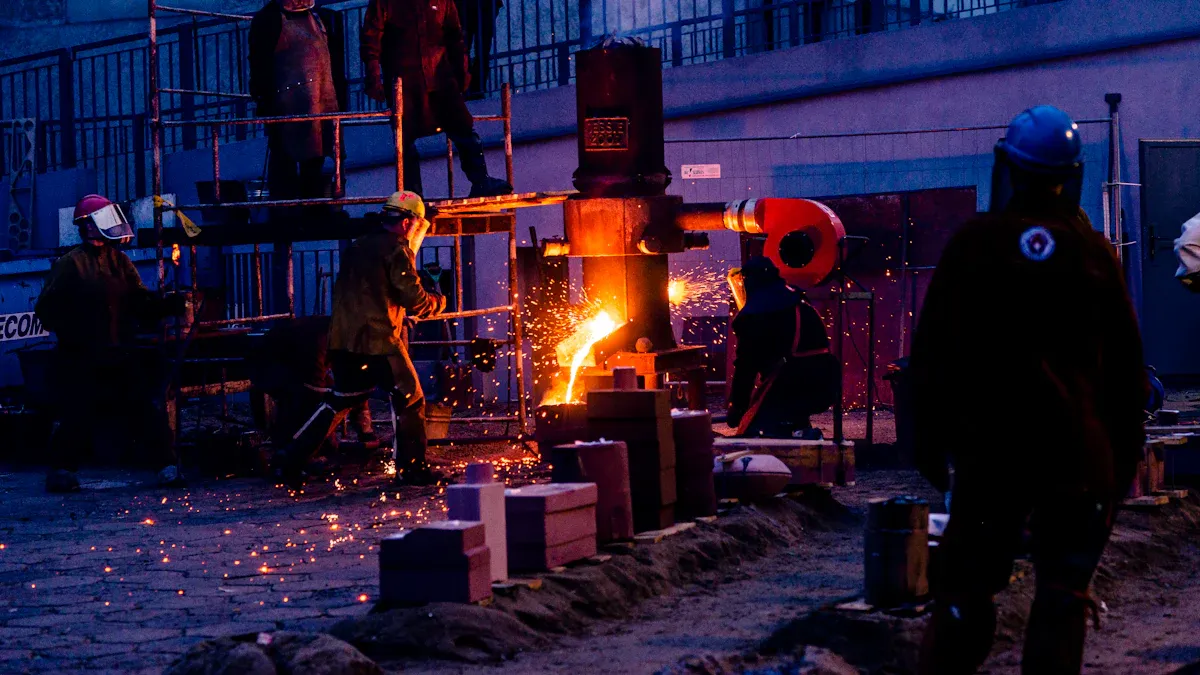
Porosity significantly affects the quality and durability of aluminium die casting. Studies reveal that elongation values drop in areas with hidden damage, linking porosity to reduced material performance in aluminium die casting products. Variability in mechanical properties, highlighted by Weibull distribution, underscores this issue. Proper design of the aluminium die casting mould ensures smoother material flow and minimizes turbulence during the aluminium die casting process, which is crucial for achieving optimal results from aluminium die casting manufacturers.
Key Takeaways
- Good mold design helps materials flow smoothly. This stops turbulence and keeps gas from getting trapped, which lowers porosity.
- Proper venting systems let trapped gases escape. This makes aluminum die castings better in quality.
- Managing cooling speeds helps metal solidify evenly. This cuts down shrinkage porosity and makes castings stronger.
Understanding Porosity in Aluminum Die Casting
What is porosity?
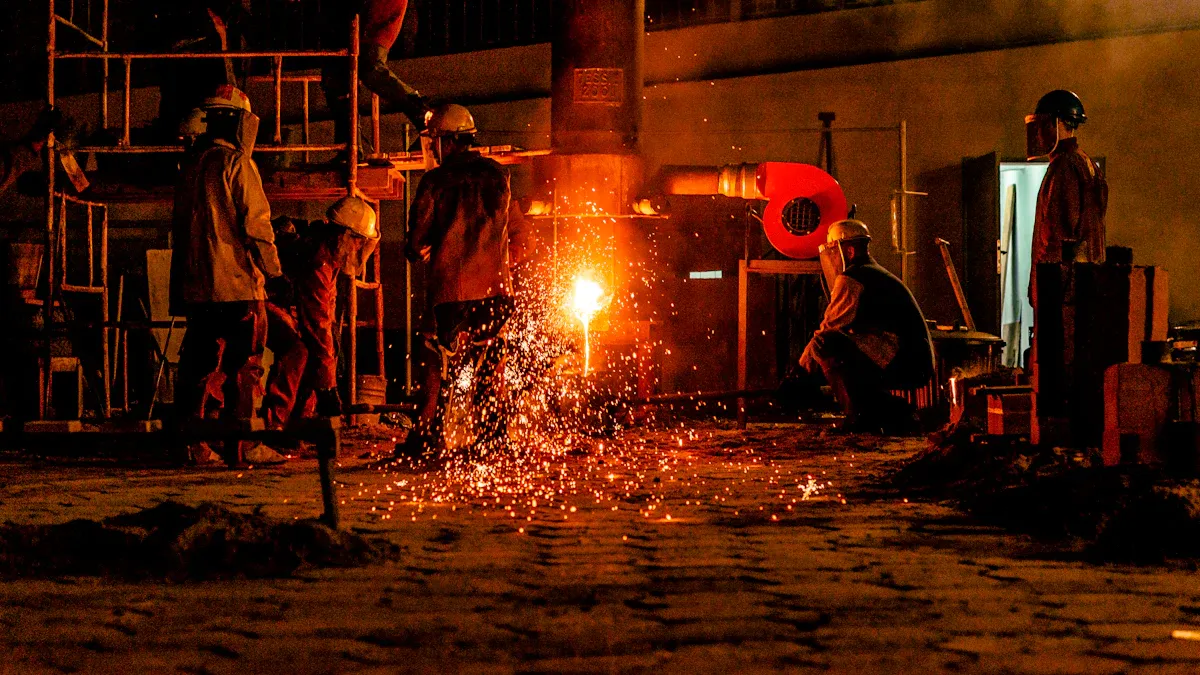
Porosity refers to the presence of small holes, voids, or cracks within solid aluminum castings. These imperfections can vary in size, from microscopic pores to larger voids, and may not always be visible on the surface. Porosity often forms during the aluminum die casting process due to trapped gases or uneven cooling. It reduces the structural integrity of the part and can lead to issues like corrosion, leakage, or mechanical failure.
Engineers measure porosity using several parameters:
- Number of pores: The total count of pores within a specific volume.
- Maximum permitted size: The largest allowable size for each pore.
- Total volume percentage: The percentage of the part’s volume that is porous.
Types of porosity in aluminum die casting
Porosity in aluminum die casting can be categorized into three main types:
- Blind Porosity: This type starts at the surface and ends within the body of the casting. It often leads to corrosion over time.
- Through Porosity: Extending from one side of the casting to the other, this type creates a leak path and compromises the part’s structural integrity.
- Fully Enclosed Porosity: Completely contained within the casting, this type remains hidden until exposed during machining.
The causes of porosity include gas entrapment during solidification and shrinkage due to uneven cooling. Poor venting, excessive lubrication, and design flaws often contribute to these issues.
Effects of porosity on casting quality and performance
Porosity significantly impacts the quality and performance of aluminum die castings. Studies show that higher porosity levels reduce the speed of ultrasonic wave propagation, indicating weaker material strength. X-ray imaging confirms these findings, highlighting the correlation between porosity and reduced casting quality.
Additionally, porosity affects the durability of aluminum die cast parts. For example, increased pouring velocity during the casting process can reduce porosity by up to 98.7%, improving the overall quality of the final product. Manufacturers must address porosity to ensure reliable and long-lasting components.
How Mold Design Prevents Porosity
Influence of mold design on material flow and solidification
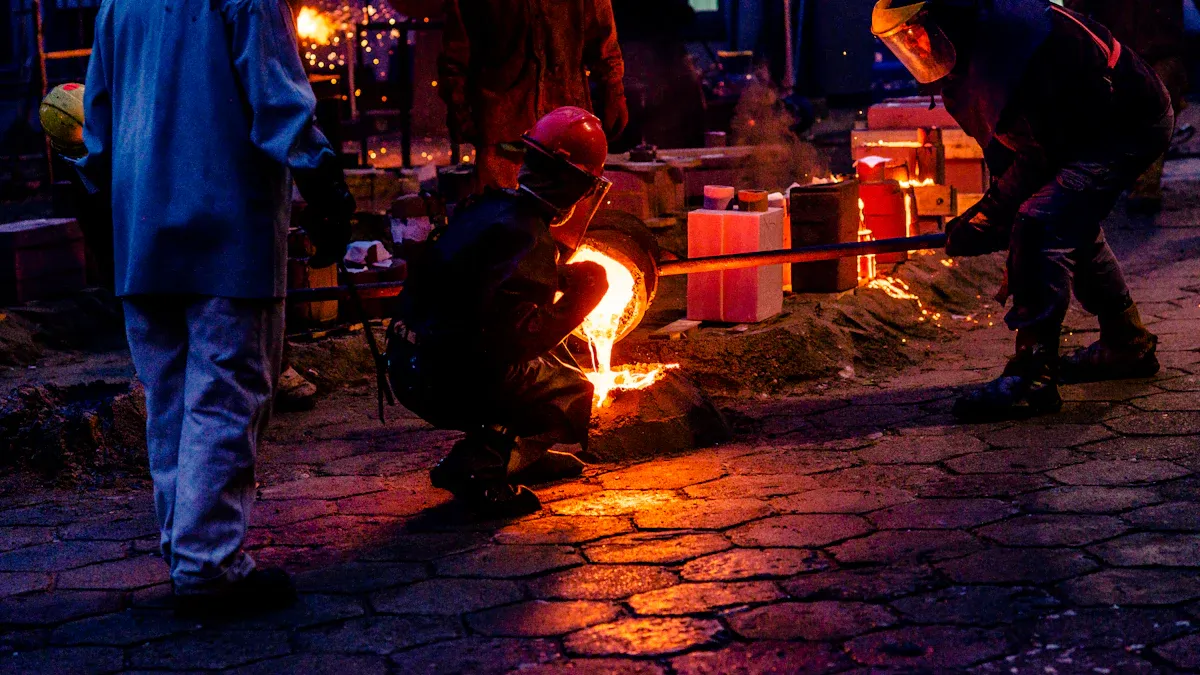
Mold design directly impacts how molten aluminum flows and solidifies during the casting process. Properly designed molds ensure smooth material flow, reducing turbulence and preventing air entrapment. This minimizes the formation of gas porosity. Additionally, optimized mold geometry promotes uniform solidification, which helps avoid shrinkage porosity caused by uneven cooling.
Research highlights the importance of mold design in improving material flow. For instance, studies show that factors like coating and pouring temperature significantly affect fluidity. The table below summarizes findings from various experiments:
| Study | Findings |
|---|---|
| Jafari et al. | Fluidity lengths changed from 1 to 8 mm thickness with and without coating; coating decreased fluidity lengths. |
| Aslandoğan | Pouring temperature was the most significant factor affecting fluidity in AISI 1040 steel. |
| Fraś et al. | Increased fluidity of cast iron with higher pouring temperatures. |
| Yang et al. | Higher Si and Ni content in aluminum alloys increased fluidity length in spiral molds. |
Flow simulation results further illustrate how mold design influences material solidification. For example, real-time x-ray experiments reveal how molten aluminum fills the mold progressively over time. These simulations demonstrate the importance of laminar flow to reduce turbulence and ensure consistent solidification.
Importance of venting and air evacuation
Venting systems play a critical role in preventing porosity in aluminum die casting. During the casting process, trapped air and gases can create voids within the material. Proper venting channels allow these gases to escape, ensuring a defect-free casting.
Effective venting requires careful placement of channels to guide air out of the mold cavity. Poorly designed venting systems can lead to gas porosity, compromising the structural integrity of the final product. Manufacturers must prioritize venting during mold design to achieve high-quality results.
Role of cooling rate control in reducing shrinkage porosity
Cooling rate control is essential for minimizing shrinkage porosity in aluminum die casting. Faster cooling rates promote uniform solidification, reducing the likelihood of voids forming due to uneven shrinkage. Studies have shown that optimizing cooling rates can significantly decrease micro-shrinkage porosity.
- Faster cooling at the edge of an ingot results in fewer and smaller micro-shrinkage pores compared to the center.
- A case study on high-density polyethylene (HDPE) demonstrated that optimizing cooling rates and mold design reduced micro-voids, leading to tighter tolerances and improved quality.
By incorporating thermal control systems into mold design, manufacturers can regulate cooling rates effectively. This ensures consistent solidification and reduces the risk of shrinkage porosity.
Key Principles of Mold Design for Minimizing Porosity
Proper gating and runner system design
A well-designed gating and runner system ensures smooth material flow during aluminum die casting. Proper flow reduces turbulence, which minimizes gas entrapment and porosity. Key parameters like flow rate, pouring temperature, and runner size significantly influence porosity reduction. The table below highlights their effects:
| Parameter | Effect on Porosity Reduction | Statistical Method Used |
|---|---|---|
| Flow Rate | Significant | ANOVA |
| Pouring Temperature | Significant | ANOVA |
| Runner Size | Significant | ANOVA |
By optimizing these parameters, manufacturers can achieve defect-free castings with improved structural integrity.
Effective venting channel incorporation
Venting channels play a critical role in allowing trapped gases to escape from the mold cavity. Without proper venting, gases can form voids, leading to porosity. Effective venting minimizes turbulence and ensures a smooth casting process. The following table demonstrates the impact of venting design on casting outcomes:
| Evidence Description | Impact on Casting Outcomes |
|---|---|
| Effective gate and venting design are critical for managing metal flow and allowing gases to escape from the mold cavity. | Minimizes turbulence, preventing defects such as porosity. |
| Strategically placed venting channels help trapped gases escape. | Reduces the occurrence of porosity and related issues. |
Strategic placement of venting channels ensures high-quality aluminum die castings with fewer defects.
Thermal control for managing cooling rates
Controlling cooling rates is essential for reducing shrinkage porosity. Faster cooling promotes uniform solidification, preventing voids caused by uneven shrinkage. Incorporating thermal control systems into mold design ensures consistent cooling across the casting. Studies show that faster cooling at the edges of castings reduces micro-shrinkage pores compared to the center. Manufacturers can achieve tighter tolerances and improved quality by optimizing cooling rates.
Ensuring uniform material flow
Uniform material flow is vital for mitigating porosity in aluminum die casting. Uneven flow can create turbulence, leading to gas entrapment and defects. Experimental findings reveal that factors like plunger pressure and liquid aluminum temperature significantly influence porosity. Key observations include:
- Squeeze castings exhibit porosity levels two times smaller than gravity die castings.
- High pressure during solidification increases grain density, reducing porosity.
- Pressing minimizes shrinkage porosity in the central part of the casting.
By ensuring uniform flow, manufacturers can produce castings with consistent quality and durability.
Actionable Tips for Optimizing Mold Design
Use advanced simulation tools for mold design
Advanced simulation tools play a crucial role in optimizing mold design for aluminum die casting. These tools allow manufacturers to predict and address potential defects before production begins. By simulating material flow, solidification, and cooling rates, engineers can identify areas prone to porosity and make necessary adjustments.
- The Simulation App enables rapid testing of various manufacturing settings, streamlining the optimization process.
- Advanced software minimizes defects in casting processes, improving efficiency and quality.
- Predictive modeling combined with finite element analysis effectively addresses casting defects.
- Case studies highlight the use of simulation in feeder design optimization, reducing shrinkage defects.
Simulation tools not only enhance process reliability but also reduce production costs by minimizing trial-and-error methods.
Regularly maintain and inspect molds
Routine maintenance and inspection of molds are essential for reducing porosity and ensuring consistent casting quality. Regular checks help identify wear, damage, or blockages in venting channels that could lead to defects.
| Improvement Type | Quantifiable Result |
|---|---|
| Reduced Porosity Levels | Significant reduction in gas porosity detected through X-ray inspections. |
| Improved Mechanical Properties | 15% increase in tensile strength, meeting pressure tightness standards. |
| Lower Scrap Rates | 25% reduction in scrap rate due to porosity defects, enhancing production efficiency. |
| Eliminating Shrinkage Cavities | Metallographic examinations showed reduced shrinkage cavities, leading to a denser microstructure. |
| Increased Component Reliability | Improved fatigue resistance and higher load-bearing capacity for aerospace applications. |
| Cost Efficiency | 20% decrease in production costs due to reduced defects and rework. |
By implementing a regular maintenance schedule, manufacturers can improve the reliability and durability of aluminum die cast parts.
Collaborate with experienced mold designers
Experienced mold designers bring valuable expertise to the table. Their knowledge of material behavior, venting systems, and cooling rate control ensures optimal mold performance. Collaborating with skilled professionals helps manufacturers address complex challenges, such as minimizing porosity and achieving uniform material flow. This partnership often leads to innovative solutions and higher-quality castings.
Test and refine designs through prototyping
Prototyping allows manufacturers to test mold designs under real-world conditions. By analyzing the performance of prototypes, engineers can identify and resolve issues before full-scale production.
- Prototyping reduces cycle times and utility costs.
- Strength metrics improve, indicating better mold performance.
- Enhanced stem inlet configurations and reduced chest volumes contribute to porosity reduction.
Testing and refining designs through prototyping ensure that the final mold delivers consistent results and meets quality standards.
Control injection parameters to reduce turbulence
Injection parameters, such as pressure, speed, and temperature, significantly influence material flow during aluminum die casting. Proper control of these parameters minimizes turbulence, reducing the risk of gas entrapment and porosity. For example, maintaining a steady injection speed ensures laminar flow, while optimal temperature settings prevent premature solidification. Manufacturers should monitor and adjust these parameters to achieve defect-free castings.
Select quality die materials and alloys
The choice of die materials and alloys directly impacts the quality of aluminum die cast parts. High-purity alloys reduce gas formation, while durable die materials withstand repeated use without deforming.
| Key Factor | Impact on Porosity |
|---|---|
| Alloy Selection | High-purity alloys reduce gas formation, minimizing porosity. |
| Temperature Control | Maintaining optimal temperatures prevents bubble formation in molten metal. |
| Pressure Management | High pressure during solidification helps fill voids, reducing shrinkage porosity. |
| Mold Design | Proper venting and avoiding sharp corners prevent gas entrapment and shrinkage. |
Selecting superior materials ensures better casting performance and reduces the likelihood of defects.
Use refining and degassing agents to reduce gas content
Refining and degassing agents play a vital role in lowering gas content in molten aluminum. These agents remove impurities, bubbles, and oxides from the liquid surface, preventing gas from re-entering the casting.
- High-quality refining and degassing agents significantly reduce gas content.
- Timely removal of scum and bubbles ensures a cleaner casting process.
- Effective use of these agents enhances the structural integrity of aluminum die cast parts.
Incorporating refining and degassing agents into the production process results in castings with fewer defects and improved durability.
Porosity challenges aluminum die casting, but proper mold design offers effective solutions. Techniques like conformal cooling channels and high-vacuum die casting (HVDC) significantly reduce porosity.
| Technique | Benefit |
|---|---|
| Conformal Cooling Channels | Minimizes thermal stresses and distortions, leading to superior dimensional accuracy. |
| High-Vacuum Die Casting (HVDC) | Reduces air and gas entrapment, resulting in components with enhanced mechanical properties and reduced porosity. |
Adhering to these principles ensures durable, high-quality castings.
FAQ
What causes porosity in aluminum die casting?
Porosity occurs due to trapped gases, uneven cooling, or shrinkage during solidification. Poor mold design and inadequate venting often contribute to this issue.
How does mold design improve casting quality?
Proper mold design ensures smooth material flow, reduces turbulence, and promotes uniform cooling. These factors minimize porosity and enhance the structural integrity of cast parts.
Why is venting important in mold design?
Venting allows trapped air and gases to escape during casting. This prevents gas porosity, ensuring defect-free and high-quality aluminum die castings.
By:haihong
email:daphne@haihongxintang.com
email:haihong@haihongxintang.com
Phone:
Sales: 0086-134 8641 8015
Support: 0086-574 8669 1714
Post time: Apr-24-2025