
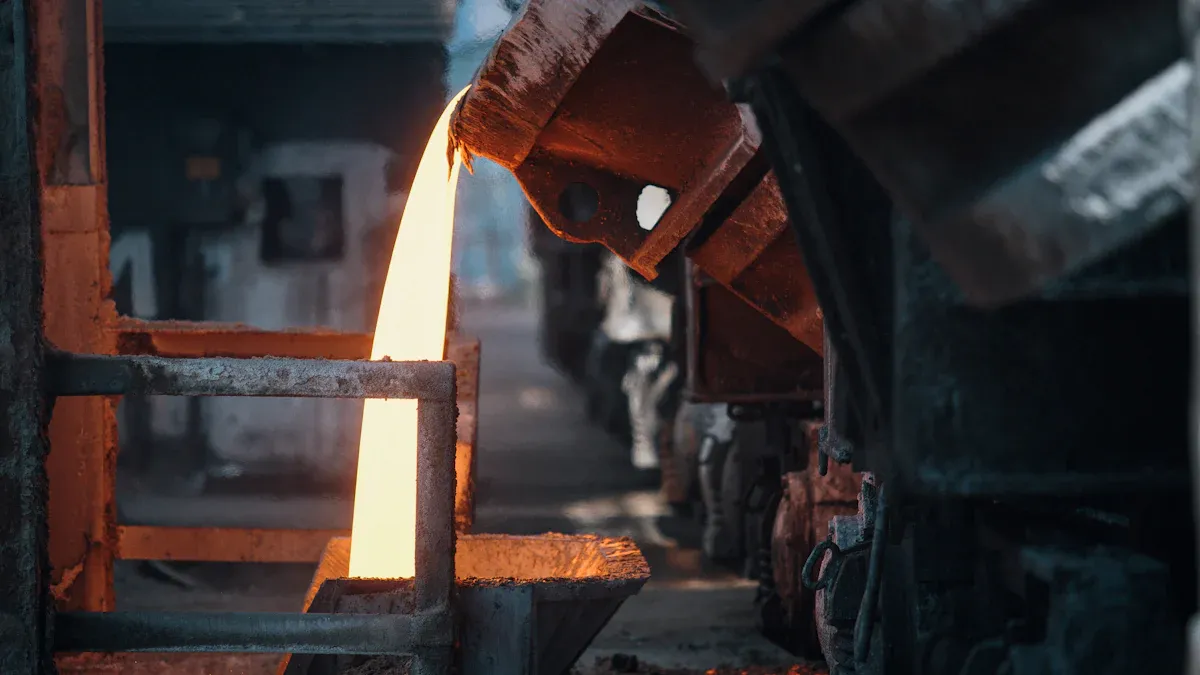
The centrifugal casting process uses spinning molds to shape molten metal into strong, precise components. This technique ensures fewer defects and greater durability compared to other methods. You’ll often find it in industries like Aluminum Parts Fabrication or Automotive Die Casting, where high-quality results are essential in the casting process of metals.
Key Takeaways
- Centrifugal casting spins molds to make strong metal parts. This process lowers flaws and makes parts last longer.
- The steps include heating the mold, pouring hot metal, spinning to harden it, and taking out the part. Each step is important for good results.
- This method works well for round shapes and gives benefits like better material quality, saving money, and being useful in many industries.
How the Centrifugal Casting Process Works
Key Principles of the Centrifugal Casting Process
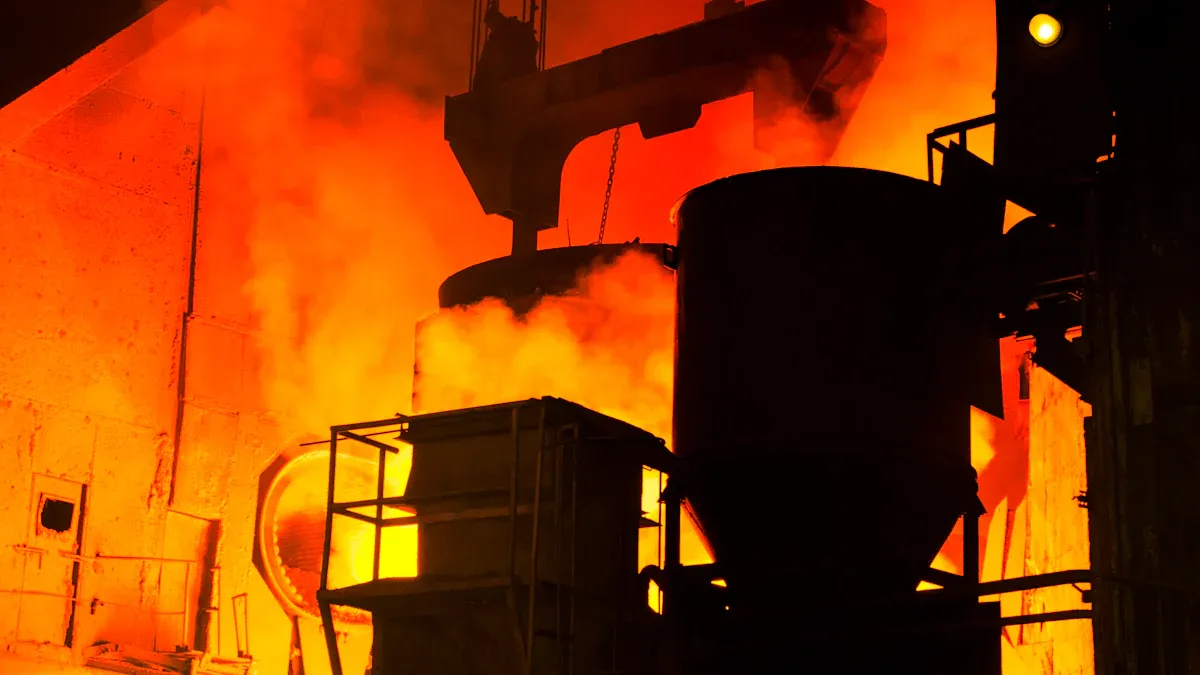
The centrifugal casting process relies on centrifugal force to shape molten metal. When the mold spins, the force pushes the liquid metal outward against the mold walls. This action removes impurities and ensures a dense, uniform structure. The spinning also helps eliminate air pockets, which reduces the chances of defects in the final product.
You’ll notice that this process works best for cylindrical or symmetrical shapes. The spinning motion distributes the metal evenly, creating strong and precise components. The mold’s speed and temperature play a critical role in achieving the desired results. Faster spinning speeds can improve the metal’s density, while controlled cooling ensures the material solidifies properly.
Tip: Understanding the principles of centrifugal force and material behavior can help you appreciate why this method produces such high-quality results.
Steps Involved in the Process
The centrifugal casting process follows a series of well-defined steps:
- Preparing the Mold: The mold is cleaned and coated with a refractory material to prevent the molten metal from sticking. This coating also improves the surface finish of the final product.
- Heating the Mold: The mold is preheated to a specific temperature. This step reduces thermal shock and ensures the metal flows smoothly.
- Pouring the Molten Metal: The molten metal is poured into the spinning mold. The centrifugal force pushes the metal outward, filling the mold cavity.
- Spinning and Solidifying: The mold continues to spin as the metal cools and solidifies. This step ensures the metal forms a dense and defect-free structure.
- Removing the Casting: Once the metal has cooled, the mold is stopped, and the casting is removed. Any excess material is trimmed, and the component is inspected for quality.
Each step plays a vital role in ensuring the final product meets the required standards. Skipping or rushing any step can lead to defects or inconsistencies.
Horizontal vs. Vertical Centrifugal Casting
Centrifugal casting can be performed in two main orientations: horizontal and vertical. Each method has its own advantages and is suited for specific applications.
| Feature | Horizontal Casting | Vertical Casting |
|---|---|---|
| Orientation | Mold spins horizontally. | Mold spins vertically. |
| Best for | Long, cylindrical shapes like pipes or tubes. | Symmetrical shapes like rings or discs. |
| Metal Distribution | Even distribution along the length of the mold. | Even distribution around the mold’s center. |
| Applications | Pipes, rollers, and bushings. | Gears, flanges, and flywheels. |
Horizontal casting is ideal for components with a consistent cross-section, while vertical casting works well for parts with varying thicknesses. Choosing the right orientation depends on the shape and function of the component you need.
Note: Both methods use the same principles of centrifugal force, but the orientation affects the way the metal flows and solidifies.
Advantages and Disadvantages of the Centrifugal Casting Process
Benefits of Centrifugal Casting
The centrifugal casting process offers several advantages that make it a preferred choice for manufacturing high-quality metal components.
- Superior Material Quality: The spinning motion forces impurities and air bubbles to move toward the inner surface of the mold. This results in a dense, defect-free structure with excellent mechanical properties.
- Cost-Effective Production: You can reduce material waste because the process uses only the required amount of molten metal. Additionally, the need for secondary machining is minimal due to the smooth surface finish.
- Versatility: This method works well for a wide range of metals, including steel, aluminum, and bronze. It also accommodates various shapes, especially cylindrical or symmetrical designs.
- Durability: Components produced through this process exhibit high strength and resistance to wear, making them ideal for demanding applications.
Did You Know? The centrifugal casting process is often used to create parts like pipes, bushings, and gears because of its ability to produce uniform and reliable results.
Limitations and Challenges
While the centrifugal casting process has many benefits, it also comes with certain limitations and challenges.
- Shape Restrictions: This method works best for cylindrical or symmetrical shapes. Complex or irregular designs may require alternative casting techniques.
- High Initial Costs: Setting up the equipment and molds can be expensive. This makes it less suitable for small-scale production or custom orders.
- Skilled Operation Required: You need trained operators to manage the process effectively. Factors like mold speed, temperature, and cooling rates must be carefully controlled to avoid defects.
- Material Limitations: Although versatile, this process may not work well with certain alloys or metals that have specific cooling or flow requirements.
Tip: Understanding these challenges can help you decide if this method is the right fit for your manufacturing needs.
Comparison with Other Casting Methods
When comparing the centrifugal casting process to other casting methods, you’ll notice distinct differences in quality, efficiency, and application.
| Feature | Centrifugal Casting | Sand Casting | Die Casting |
|---|---|---|---|
| Material Quality | High density, minimal defects. | Lower density, more impurities. | High density, but prone to porosity. |
| Surface Finish | Smooth, requires little machining. | Rough, needs extensive finishing. | Smooth, but limited to smaller components. |
| Production Cost | Moderate, with low material waste. | Low, but higher waste and finishing costs. | High, due to expensive molds and equipment. |
| Best for | Cylindrical or symmetrical shapes. | Complex or irregular shapes. | High-volume production of small parts. |
Centrifugal casting stands out for its ability to produce durable and defect-free components. However, sand casting is better for intricate designs, while die casting excels in mass production.
Note: Choosing the right casting method depends on your specific requirements, including shape, material, and production volume.
Applications of the Centrifugal Casting Process
Aerospace and Automotive Industries
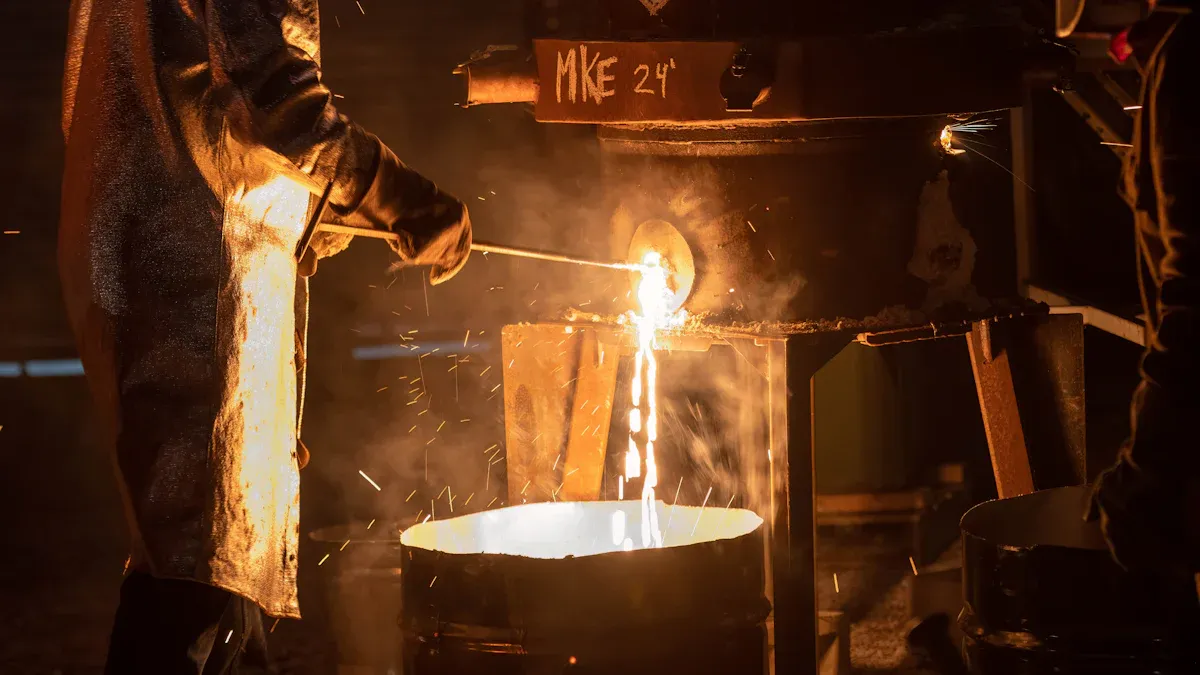
You’ll find the centrifugal casting process widely used in aerospace and automotive industries. This method produces components like jet engine rings, turbine blades, and cylinder liners. These parts require high strength and resistance to wear, which the process delivers by creating dense and defect-free structures.
In aerospace, the precision of this method ensures that critical components can withstand extreme temperatures and pressures. For automotive applications, it helps create durable parts like brake drums and gear blanks. These components play a vital role in ensuring safety and performance.
Fun Fact: Many high-performance vehicles rely on centrifugal casting to produce lightweight yet strong parts for better fuel efficiency.
Industrial Equipment and Manufacturing
The centrifugal casting process is essential in manufacturing industrial equipment. It’s commonly used to produce pipes, rollers, and bushings. These components often operate under heavy loads or in harsh environments, so they need to be tough and reliable.
This method also supports the production of large-scale machinery parts. For example, it’s used to create rollers for steel mills or bushings for heavy-duty equipment. The process ensures these parts have a long service life, reducing maintenance costs and downtime.
Tip: If you’re in the manufacturing industry, consider centrifugal casting for parts that demand durability and precision.
Other Applications in Metalworking
Beyond aerospace and industrial uses, this process finds applications in various other metalworking fields. It’s used to create flanges, flywheels, and even artistic metalwork. The ability to produce symmetrical shapes makes it ideal for decorative and functional designs.
You’ll also see this method in the production of marine components like propeller hubs and pump casings. These parts need to resist corrosion and perform reliably in challenging environments. The centrifugal casting process ensures they meet these demands with ease.
Did You Know? Marine-grade alloys cast using this method are often more resistant to saltwater corrosion than those made with other techniques.
The centrifugal casting process offers a reliable way to produce durable, high-quality metal components. You’ve learned how its spinning molds create dense, defect-free structures. Its benefits, like superior material quality and cost efficiency, make it essential for industries such as aerospace and manufacturing. Understanding this process helps you choose the best method for your needs.
FAQ
What types of metals work best for centrifugal casting?
You can use metals like steel, aluminum, bronze, and copper alloys. These materials flow well and solidify evenly during the spinning process.
Can centrifugal casting handle complex shapes?
No, this process works best for cylindrical or symmetrical designs. For intricate shapes, you should consider sand or die casting methods.
How do you ensure quality in centrifugal casting?
You should control mold speed, temperature, and cooling rates. Proper mold preparation and skilled operation also help achieve defect-free results.
Post time: May-13-2025