
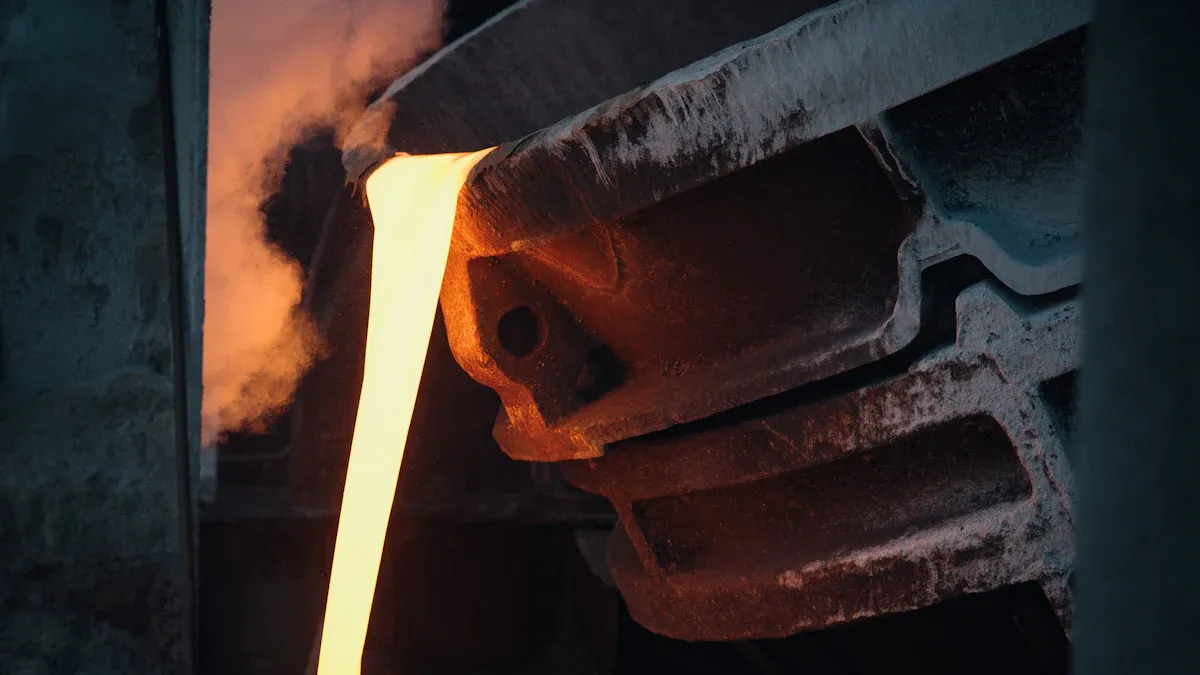
Centrifugal metal casting empowers you to create flawless cylindrical and hollow components with remarkable precision. This technique stands out for its ability to evenly distribute molten metal using centrifugal force, ensuring uniform density and minimal defects. Its versatility makes it indispensable across industries like automotive, aerospace, and Metal Aluminum Die Casting. By mastering this process, you can elevate your craftsmanship, reduce errors, and produce components that meet the highest standards of quality.
Key Takeaways
- Centrifugal metal casting spins molds to make strong parts. This method reduces mistakes and gives high-quality results.
- Follow these steps: get the mold ready, melt the metal, pour it in, let it harden, and check the product for quality.
- Pick the right materials and tools. Good metals and proper tools make the process better and the product last longer.
- Control the spinning speed and watch the temperature closely. These are important to get the right density and avoid problems.
- Centrifugal casting works for many industries like cars, planes, and buildings. It is a useful skill to learn.
Understanding Centrifugal Metal Casting
What is centrifugal metal casting?
Centrifugal metal casting is a manufacturing process that uses centrifugal force to shape molten metal into cylindrical or hollow components. You pour molten metal into a rotating mold, which spins at high speeds to distribute the material evenly. This technique is ideal for creating parts like pipes, rings, and bushings with consistent density and minimal defects.
Centrifugal metal casting stands out because it eliminates impurities and ensures a smooth surface finish.
This process is widely used in industries such as automotive, aerospace, and construction, where precision and durability are essential.
How centrifugal force shapes molten metal
When the mold spins, centrifugal force pushes the molten metal outward toward the mold walls. This force ensures that the metal fills every corner of the mold, creating a uniform shape. As the metal cools and solidifies, it retains the shape of the mold with high accuracy.
You can think of centrifugal force as the invisible hand that guides the molten metal into place. It not only shapes the metal but also removes lighter impurities by forcing them toward the center, where they can be easily removed. This results in components with superior structural integrity.
Key advantages of centrifugal casting
Centrifugal casting offers several benefits that make it a preferred choice for many applications:
- High-quality components: The process produces parts with uniform density and fewer defects.
- Material efficiency: You can use less material while achieving the desired strength and durability.
- Versatility: It works with various metals, including steel, aluminum, and bronze.
- Cost-effectiveness: The reduced need for post-processing saves time and money.
Tip: By mastering centrifugal metal casting, you can produce components that meet strict industry standards while minimizing waste.
This technique is a game-changer for projects requiring precision and reliability.
The Centrifugal Casting Process
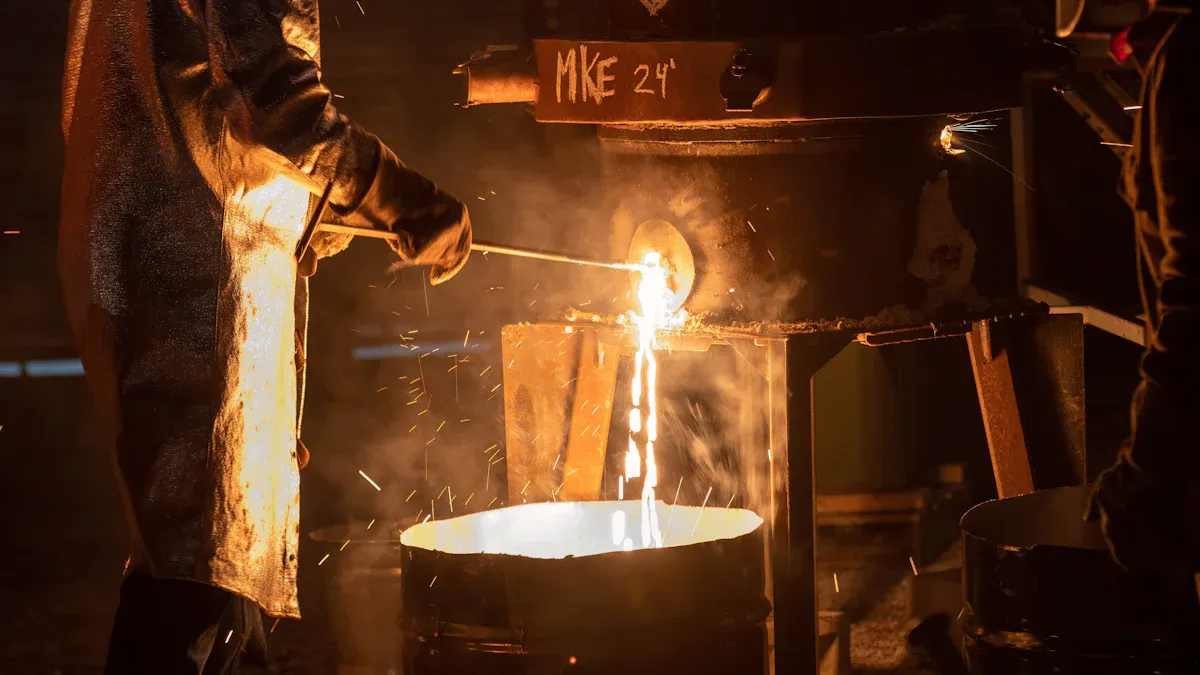
Step-by-step guide to the process
Mastering the centrifugal casting process begins with understanding its steps. Each stage plays a critical role in shaping high-quality components. Here’s how you can perform it:
- Prepare the mold: Start by cleaning and preheating the mold. Preheating prevents thermal shock and ensures the molten metal flows smoothly.
- Melt the metal: Heat the chosen metal in a furnace until it reaches its melting point. Use a temperature gauge to monitor the heat accurately.
- Pour the molten metal: Carefully pour the molten metal into the spinning mold. The rotation speed must be adjusted to suit the size and type of component you are creating.
- Allow the metal to solidify: Let the spinning mold cool down. The centrifugal force ensures the metal forms a dense, uniform structure as it solidifies.
- Remove the casting: Once the metal has cooled, stop the mold and remove the finished component. Inspect it for any defects or irregularities.
Tip: Always wear protective gear during the process to ensure safety.
By following these steps, you can achieve consistent results and minimize errors in your work.
Essential materials for centrifugal casting
To succeed in centrifugal metal casting, you need the right materials. These materials directly impact the quality of your final product.
- Metals: Common choices include steel, aluminum, bronze, and cast iron. Each metal has unique properties, so select one based on your project’s requirements.
- Mold material: Molds are typically made from durable materials like graphite, ceramic, or steel. The mold must withstand high temperatures and centrifugal force.
- Lubricants: Use mold release agents or lubricants to prevent the molten metal from sticking to the mold. This ensures a smooth surface finish.
Note: Always choose high-quality materials to enhance the durability and precision of your components.
Having the right materials on hand ensures a smoother casting process and better results.
Tools and equipment used in the process
The tools and equipment you use are just as important as the materials. They help you control the process and achieve the desired outcome.
- Centrifugal casting machine: This machine spins the mold at high speeds. It comes in different types, such as vertical or horizontal, depending on your application.
- Furnace: A furnace melts the metal to the required temperature. Induction furnaces are commonly used for their efficiency and precision.
- Temperature gauge: This tool helps you monitor the metal’s temperature to avoid overheating or underheating.
- Protective gear: Safety equipment like gloves, goggles, and heat-resistant clothing protects you from potential hazards.
Tip: Regularly maintain your tools and equipment to ensure they function properly and last longer.
Using the right tools and equipment not only improves efficiency but also enhances the quality of your work.
Types of Centrifugal Casting and Their Applications
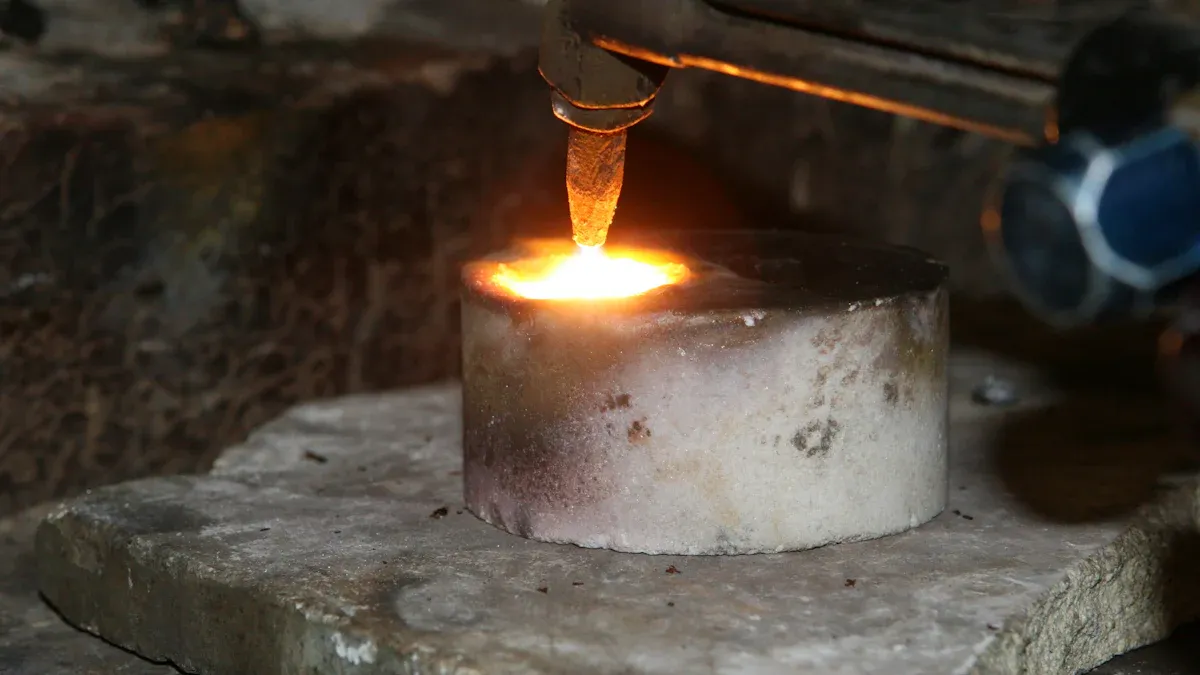
Vertical centrifugal casting: Features and applications
Vertical centrifugal casting involves spinning the mold in an upright position. This method is ideal for creating components with symmetrical shapes, such as rings, bushings, and flanges. The vertical orientation allows gravity to assist the centrifugal force, ensuring even distribution of molten metal.
You can use this technique for parts that require a high level of precision and strength. Industries like aerospace and automotive often rely on vertical centrifugal casting for critical components. For example, it is commonly used to produce jet engine parts and brake drums.
Tip: Preheating the mold in vertical casting reduces the risk of thermal shock and improves the surface finish of your components.
Horizontal centrifugal casting: Features and applications
Horizontal centrifugal casting spins the mold along a horizontal axis. This method is perfect for creating long, cylindrical components like pipes, tubes, and shafts. The horizontal orientation ensures the molten metal spreads evenly along the length of the mold, resulting in consistent wall thickness.
This technique is widely used in industries such as construction and oil and gas. For instance, you can use it to manufacture pipelines, hydraulic cylinders, and structural supports. Horizontal casting is also efficient for producing large quantities of components with uniform dimensions.
Note: Adjusting the rotation speed in horizontal casting helps you control the thickness and quality of the final product.
Vacuum centrifugal casting: Features and applications
Vacuum centrifugal casting takes place in a sealed chamber with reduced air pressure. This method prevents oxidation and contamination, making it ideal for high-purity metals and alloys. The vacuum environment ensures the molten metal retains its original properties, resulting in superior-quality components.
You can use this technique for applications requiring exceptional precision and cleanliness. It is commonly employed in the medical, electronics, and aerospace industries. For example, vacuum casting is used to produce surgical instruments, electronic connectors, and turbine blades.
Tip: Always monitor the vacuum pressure during the process to maintain optimal casting conditions.
Mastering Centrifugal Casting Techniques
Tips for achieving precision and quality
Precision and quality are the hallmarks of successful centrifugal metal casting. To achieve these, you need to focus on preparation, execution, and inspection.
- Prepare thoroughly: Clean and preheat the mold to ensure smooth metal flow. Use high-quality materials to avoid defects.
- Control rotation speed: Adjust the mold’s spinning speed based on the component’s size and material. Faster speeds improve density, while slower speeds help with thicker walls.
- Monitor temperature: Use a temperature gauge to keep the molten metal within the optimal range. Overheating can weaken the metal, while underheating may cause incomplete filling.
- Inspect the final product: Check for surface irregularities, cracks, or impurities. Early detection helps you address issues before they escalate.
Tip: Consistency is key. Follow the same steps for every casting to maintain uniform quality across all components.
By focusing on these areas, you can produce components that meet industry standards and exceed expectations.
Common challenges and solutions
Centrifugal metal casting comes with its own set of challenges. Knowing how to address them ensures smoother operations and better results.
- Uneven metal distribution: This occurs when the mold spins at an incorrect speed. Solution: Adjust the rotation speed to match the component’s size and material.
- Thermal shock: Sudden temperature changes can damage the mold. Solution: Preheat the mold to reduce stress caused by molten metal.
- Impurities in the metal: Contaminants can weaken the final product. Solution: Use high-purity metals and vacuum casting for critical applications.
- Surface defects: Rough finishes or cracks can appear due to improper cooling. Solution: Allow the mold to cool gradually and inspect the casting for defects.
Note: Addressing challenges early prevents costly mistakes and ensures the casting process runs smoothly.
Troubleshooting issues in centrifugal casting
Even with careful planning, issues can arise during centrifugal casting. Troubleshooting helps you identify and resolve problems quickly.
- Problem: Metal not filling the mold completely
- Cause: Low rotation speed or insufficient molten metal.
- Solution: Increase the mold’s spinning speed and ensure enough molten metal is available.
- Problem: Cracks in the casting
- Cause: Rapid cooling or uneven metal distribution.
- Solution: Cool the mold gradually and check the rotation speed for uniform distribution.
- Problem: Impurities in the final product
- Cause: Contaminated metal or poor mold preparation.
- Solution: Use clean, high-quality metals and thoroughly clean the mold before casting.
Tip: Keep a troubleshooting checklist handy to quickly address common issues during the process.
By troubleshooting effectively, you can minimize downtime and maintain the quality of your components.
Choosing Centrifugal Casting for Your Project
Factors to consider for project suitability
Before choosing centrifugal casting for your project, evaluate its compatibility with your requirements. Start by assessing the shape and size of the components you need. This method works best for cylindrical or hollow parts like pipes, bushings, and rings. If your project demands high precision and uniform density, centrifugal casting is an excellent choice.
Next, consider the material you plan to use. This process supports a wide range of metals, including steel, aluminum, and bronze. Ensure the metal aligns with your project’s durability and strength needs. Finally, think about production volume. Centrifugal casting is ideal for both small and large-scale manufacturing, offering flexibility for various industries.
Tip: Always match the casting method to your project’s technical and economic goals for the best results.
Industries benefiting from centrifugal casting
Centrifugal casting plays a vital role in many industries due to its precision and efficiency. In the automotive sector, it produces brake drums, engine sleeves, and other critical components. Aerospace companies rely on it for jet engine parts and turbine blades, where strength and accuracy are essential.
The construction industry uses this method to manufacture pipes and structural supports. In the medical field, it creates surgical instruments and implants with high purity. Even electronics benefit from vacuum centrifugal casting, which ensures contamination-free connectors and components.
Note: The versatility of centrifugal casting makes it a valuable technique across diverse fields.
Comparing centrifugal casting to other methods
Centrifugal casting offers unique advantages over other casting methods. Unlike sand casting, it eliminates impurities and produces components with smoother surfaces. Compared to investment casting, it is faster and more cost-effective for cylindrical parts.
This method also stands out for its material efficiency. It uses less metal while maintaining strength and durability. Additionally, centrifugal casting minimizes post-processing, saving time and reducing costs. For projects requiring precision and reliability, it often outperforms traditional methods.
Tip: Evaluate your project’s needs to determine if centrifugal casting is the most efficient and cost-effective option.
Mastering centrifugal metal casting techniques unlocks the potential to create high-quality, durable components with precision. You’ve learned how centrifugal force shapes molten metal, explored the step-by-step process, and discovered the unique applications of vertical, horizontal, and vacuum casting.
By refining your skills and applying these methods, you can achieve exceptional results.
Take the next step by practicing regularly and diving into advanced resources. The more you experiment, the closer you’ll get to perfecting this versatile and efficient casting method.
FAQ
What types of metals work best for centrifugal casting?
You can use metals like steel, aluminum, bronze, and cast iron. Each metal offers unique properties, so choose one based on your project’s strength, durability, and application needs.
Tip: For high-purity components, vacuum centrifugal casting works best with alloys and specialty metals.
How do you prevent defects in the final casting?
Clean and preheat the mold to avoid thermal shock. Use high-quality metals and monitor the rotation speed. Inspect the final product for cracks or impurities.
Note: Consistent preparation and monitoring ensure fewer defects and better results.
Can centrifugal casting handle large-scale production?
Yes, centrifugal casting is ideal for both small and large-scale manufacturing. Its efficiency and precision make it suitable for producing multiple components with uniform quality.
Example: Industries like automotive and construction rely on this method for mass production.
What safety precautions should you follow during the process?
Always wear protective gear, including gloves, goggles, and heat-resistant clothing. Ensure proper ventilation in your workspace. Regularly inspect equipment for safe operation.
Safety first! Following these precautions minimizes risks and ensures a secure working environment.
How does centrifugal casting compare to sand casting?
Centrifugal casting produces smoother surfaces and eliminates impurities. It’s faster and more cost-effective for cylindrical parts. Sand casting, however, works better for complex shapes.
| Feature | Centrifugal Casting | Sand Casting |
|---|---|---|
| Surface Finish | Smooth | Rough |
| Speed | Faster | Slower |
| Best for | Cylindrical components | Complex shapes |
Choose the method that aligns with your project’s goals.
Post time: Jun-09-2025