
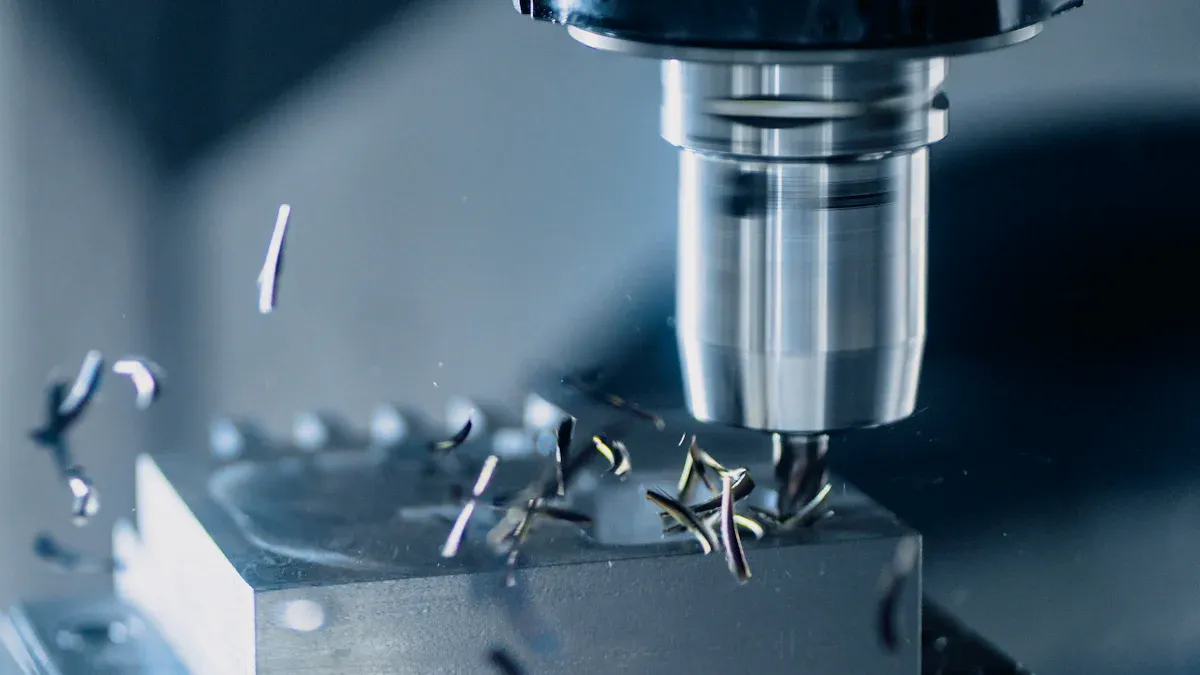
Durable metal die casting parts deliver unmatched precision through innovative methods and premium materials. These metal die cast components are essential in industries that demand accuracy. For example, over 60% of all cast products, including various metal die casting parts foundry outputs, go to the automotive sector, showcasing its dominance. Meanwhile, Europe’s metal die casting part market is growing by 7.1% annually, driven by advancements in technology and demand for centrifugal metal die casting solutions.
Key Takeaways
- Strong metal die casting parts use materials like aluminum and zinc. These materials make them tough and able to handle tough conditions.
- Modern methods, like vacuum die casting and computer testing, improve accuracy. They also help avoid mistakes during production.
- Good mold designs help metal flow better and control heat. This makes better parts and lowers the cost to make them.
Key Factors Behind Durable Metal Die Casting Parts
High-Quality Material Selection
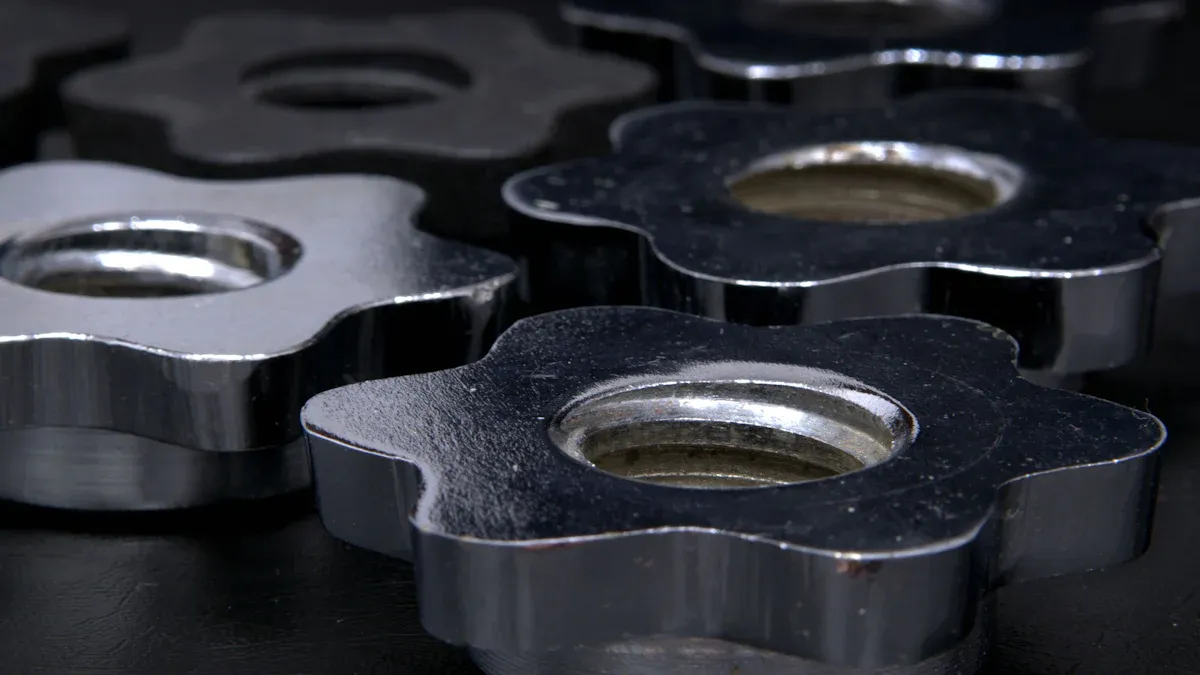
The foundation of durable metal die casting parts lies in the materials used. Manufacturers carefully select metals and alloys that offer strength, corrosion resistance, and thermal stability. Aluminum, zinc, and magnesium are popular choices due to their lightweight properties and excellent durability. These materials ensure that the final components can withstand harsh environments and maintain their precision over time.
To enhance performance, manufacturers often use advanced alloys. These alloys improve the mechanical properties of the parts, making them suitable for high-stress applications. For example, aluminum alloys are commonly used in the automotive industry for engine components, as they provide both strength and heat resistance.
Tip: Choosing the right material is not just about strength. It’s also about ensuring the material can be efficiently cast into complex shapes without compromising quality.
Advanced Manufacturing Techniques
Modern manufacturing techniques play a crucial role in producing durable metal die casting parts. These methods optimize the casting process, reduce defects, and improve overall efficiency. For instance, simulation techniques allow engineers to predict how molten metal will flow and solidify within the mold. This reduces the chances of defects and ensures consistent quality.
High-vacuum die casting is another game-changer. By minimizing air entrapment, this technique produces components with fewer pores and stronger structures. The result? Parts with superior surface finishes and enhanced durability.
Here’s a quick comparison of some advanced techniques and their benefits:
| Technique | Efficiency Gain Description |
|---|---|
| Simulation Techniques | Optimize metal flow and solidification, reducing defects and improving mechanical properties. |
| High-Vacuum Die Casting | Minimizes air entrapment and porosity, yielding denser, stronger components with superior surface finishes. |
| Advanced Materials | Improve die performance and longevity, allowing for the production of intricate and durable components. |
| Process Control Systems | Enhance precision and efficiency through real-time monitoring and adjustments, reducing cycle times and downtime. |
Rigorous quality control processes further enhance precision. Manufacturers use methods like Six Sigma to identify and eliminate defects. Regular inspections and unit-by-unit testing ensure that only flawless components reach the market. These practices not only improve precision but also boost customer confidence in the final product.
Note: Advanced manufacturing techniques don’t just improve quality. They also make the production process faster and more cost-effective, benefiting both manufacturers and customers.
Achieving Precision in Metal Die Casting
Importance of Mold Design
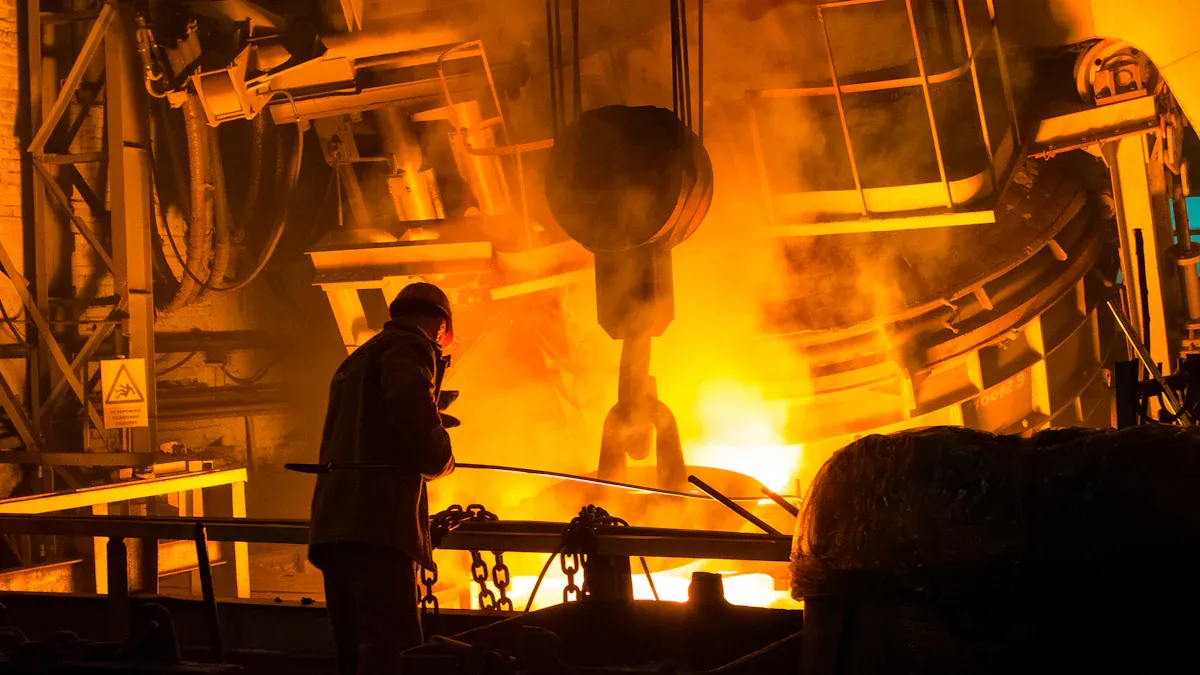
Precision in metal die casting starts with the mold. A well-designed mold ensures that every component meets exact specifications. Engineers focus on optimizing mold features to improve fluid flow, thermal management, and structural integrity. For instance, a reduced-volume fluid chamber enhances the flow of molten metal, while lattice pattern optimization ensures even thermal distribution. These design elements minimize defects and improve the overall quality of the cast parts.
Here’s a closer look at how specific mold design features contribute to precision:
| Feature | Description |
|---|---|
| Fluid Chamber Design | Reduces volume to optimize fluid flow and thermal management. |
| Lattice Pattern Optimization | Ensures uniform fluid flow and thermal distribution for better casting precision. |
| Diffused Inlet Holes | Improves fluid flow, resulting in a more uniform texture on the final product. |
| Structural Integrity | Maintains wall strength with ribbed designs, ensuring compatibility with existing systems. |
By focusing on these aspects, manufacturers can produce durable metal die casting parts that meet the high standards of industries like automotive and aerospace.
Tip: A well-designed mold not only improves precision but also reduces production costs by minimizing material waste and defects.
Role of Advanced Technology
Advanced technology plays a pivotal role in achieving precision in metal die casting. Digital manufacturing tools, such as digital twins and IoT sensors, allow manufacturers to simulate and monitor the casting process in real time. This reduces errors and ensures that each part meets exact specifications. For example, digital twins enable engineers to predict potential issues before production begins, saving time and resources.
Here are some technological advancements shaping the die casting industry:
- Digital twins simulate the casting process, reducing defects and improving product quality.
- IoT sensors monitor critical parameters like mold temperature and pressure, optimizing production.
- Additive manufacturing (AM) creates cores and molds with binder jet 3D printers, enhancing design flexibility.
- AI-powered predictive maintenance reduces unplanned downtime by up to 30%, improving operational efficiency.
- Real-time data analysis shortens cycle times by up to 20%, boosting productivity.
Performance metrics confirm the effectiveness of these technologies in ensuring precision. For instance, maintaining a casting defect rate below 2% demonstrates high-quality control. Additionally, equipment utilization rates above 85% optimize resources and minimize downtime. A 15% increase in the adoption of new technologies also reflects a commitment to operational excellence.
| Metric | Description |
|---|---|
| Casting Defect Rates | Achieving a defect rate below 2% ensures high precision and quality control in metal casting. |
| Equipment Utilization | Maintaining utilization above 85% optimizes resources and minimizes downtime, enhancing production. |
| Adoption Rate of New Tech | A target increase of 15% in new technology adoption indicates a commitment to operational excellence. |
By leveraging these advancements, manufacturers can produce durable metal die casting parts with unmatched precision, meeting the demands of high-precision industries.
Note: Advanced technology not only improves precision but also enhances efficiency, making it a win-win for manufacturers and customers alike.
Benefits of Durable and Precise Die Casting Parts
Cost Efficiency and Longevity
Durable metal die casting parts offer significant cost savings over their lifecycle. Manufacturers benefit from reduced tooling costs since durable molds last longer and require fewer replacements. This minimizes downtime and keeps production running smoothly. Additionally, economies of scale lower per-unit costs as production volumes increase.
Automation also plays a key role in cost efficiency. Automated systems reduce labor expenses and improve consistency, ensuring high-quality parts with minimal waste. Real-time process monitoring further enhances efficiency by maintaining quality and reducing defects.
Here’s a breakdown of how these factors contribute to cost savings:
| Factor | Explanation |
|---|---|
| Reduced Tooling Costs | Durable molds extend lifespan, cutting replacement and downtime costs. |
| Lower Per-Unit Costs | Higher production volumes lead to economies of scale. |
| Minimized Downtime | Long-lasting molds reduce interruptions in production. |
| Automation Benefits | Automation lowers labor costs and ensures consistent quality. |
| Process Monitoring | Real-time data helps maintain quality and reduces defect-related expenses. |
| Material Waste Reduction | Lean manufacturing minimizes waste, saving costs and supporting sustainability. |
High-quality die casting parts also extend the lifespan of components. For example, automotive parts made with these castings can last up to 30% longer, reducing replacement costs and improving reliability.
Tip: Investing in durable die casting parts may seem costly upfront, but the long-term savings make it a smart choice for manufacturers.
Applications in High-Precision Industries
Durable and precise die casting parts are indispensable in industries that demand accuracy and reliability. The automotive sector relies on these parts for critical components like engine blocks and transmission cases. Lightweight die castings reduce vehicle weight by up to 50%, improving fuel efficiency and cutting material costs.
In aerospace, precision is non-negotiable. Lightweight aluminum components meet the industry’s need for fuel-efficient designs while maintaining structural integrity. Increased spending on new aircraft and defense technologies drives the demand for high-performance materials.
The global die casting market reflects this growing importance. In 2023, it was valued at $16,190 million, with projections reaching $21,230 million by 2027 at a 4% CAGR. This growth highlights the critical role of die casting in high-precision industries.
- The aerospace sector prioritizes weight reduction for better fuel efficiency.
- Defense applications require high-performance materials for advanced technologies.
- Automotive manufacturers depend on die casting for durable, lightweight components.
The versatility of durable metal die casting parts ensures their relevance across these industries, making them a cornerstone of modern manufacturing.
Note: As industries evolve, the demand for precision and durability in die casting will only continue to grow.
Durable metal die casting parts revolutionize manufacturing by combining robust materials, cutting-edge techniques, and strict quality checks. Their integration significantly boosts efficiency and reduces costs. For instance, Tesla’s Model Y showcases a 40% cost reduction in manufacturing, with its integrated die-casting aluminum body costing 10,600 yuan compared to 14,400 yuan for an all-aluminum body.
| Metric | Value |
|---|---|
| Reduction in manufacturing costs | 40% (Tesla Model Y) |
| Cost of integrated die-casting aluminum body | 10,600 yuan |
| Cost of all aluminum stamping welded body | 14,400 yuan |
| Cost of steel aluminum mixed welded body | 12,000 yuan |
| Cost reduction compared to steel aluminum | 12.32% |
| Cost reduction compared to all aluminum | 26.40% |
| Reduction in number of parts (Model Y vs Model 3) | 79 parts |
| Reduction in manufacturing time | 120-180 seconds (from 1-2 hours) |
These parts play a vital role in industries like automotive, aerospace, and medical devices, where precision and durability are non-negotiable. Their ability to streamline production while maintaining high standards makes them indispensable in modern manufacturing.
FAQ
What makes metal die casting parts so durable?
Manufacturers use high-quality alloys and advanced techniques to create parts that resist wear, corrosion, and extreme conditions. This ensures long-lasting performance in demanding applications.
How does die casting achieve such precise results?
Precision comes from well-designed molds, advanced technology like digital twins, and strict quality control. These factors ensure every part meets exact specifications.
Which industries benefit most from die casting?
Automotive, aerospace, and medical sectors rely heavily on die casting. These industries demand lightweight, durable, and precise components for critical applications.
By:haihong
email:daphne@haihongxintang.com
email:haihong@haihongxintang.com
Phone:
Sales: 0086-134 8641 8015
Support: 0086-574 8669 1714
Post time: Apr-25-2025