
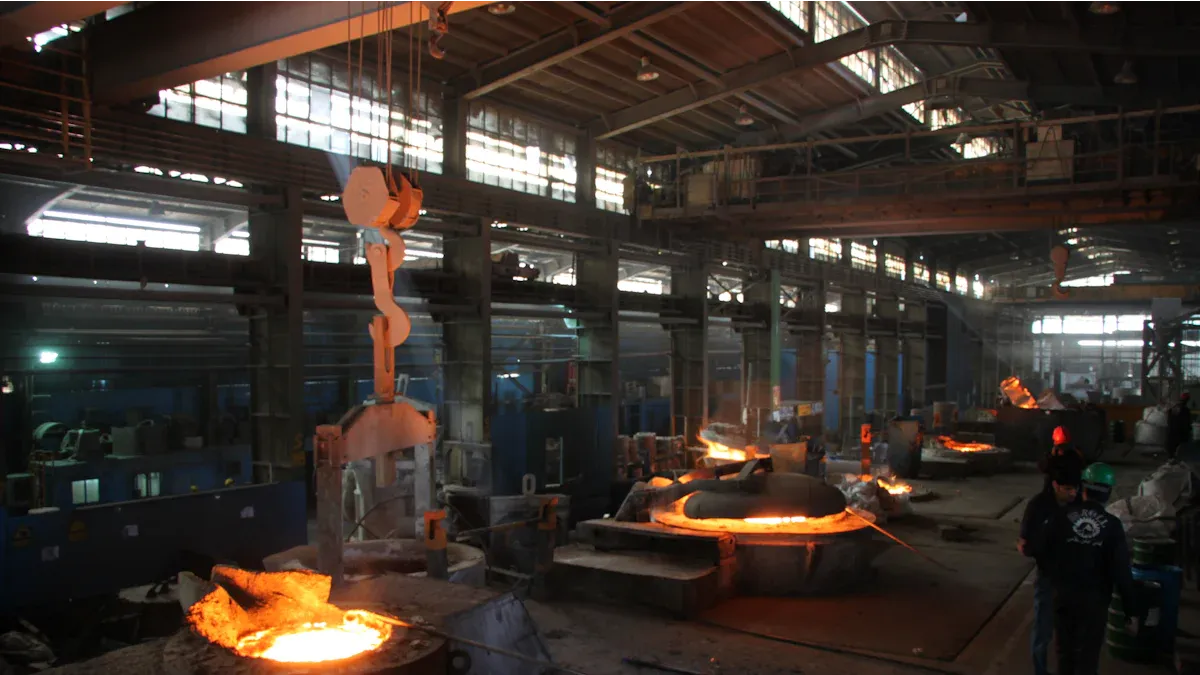
You play a key role in OEM metal fabrication when you choose the right partners in China. Advanced technology and skilled teams help you achieve precision metal processing at scale. By using CAD/CAM software and high-pressure equipment, you ensure a low – cost die casting service that meets strict industry standards. Strong teamwork from design to production supports both accuracy and efficiency.
Key Takeaways
- Work closely with engineers and designers early to catch problems and speed up production.
- Use advanced machines and automation to make precise parts faster and reduce costs.
- Choose the right materials and build strong supplier partnerships to save money and ensure quality.
- Check parts during production and use data to keep quality high and fix issues quickly.
- Apply lean methods and track inventory to cut waste, lower costs, and improve efficiency.
Design Optimization in OEM Metal Fabrication
Collaborative Design and Engineering
You achieve better results in OEM metal fabrication when you work closely with engineers and designers. Early collaboration helps you identify potential challenges before production begins. You can share ideas, review drawings, and discuss requirements as a team. This process ensures that every detail matches your expectations. When you communicate openly, you reduce errors and speed up the project timeline. Many successful companies use regular meetings and digital platforms to keep everyone on the same page.
Design for Manufacturability (DFM) Principles
You improve efficiency and lower costs by applying DFM principles. These guidelines help you create parts that are easy to produce and assemble. You select shapes and features that simplify the die casting process. For example, you avoid sharp corners and complex undercuts. You also choose standard sizes and tolerances whenever possible. This approach reduces waste and shortens lead times in OEM metal fabrication. By thinking about manufacturing from the start, you make sure your designs fit real-world production needs.
Tip: Always review your design with the production team. Their feedback can help you spot issues early and save money.
Simulation and Prototyping Tools
You use simulation software to test your designs before making physical parts. These tools let you see how materials flow and how the mold fills during die casting. You can predict problems like air pockets or weak spots. When you find issues, you adjust your design quickly. Prototyping gives you a real sample to check fit and function. This step helps you confirm that your part meets all requirements. Simulation and prototyping speed up development and improve quality in OEM metal fabrication.
Advanced Manufacturing Technologies and Automation
High-Precision Die Casting Equipment
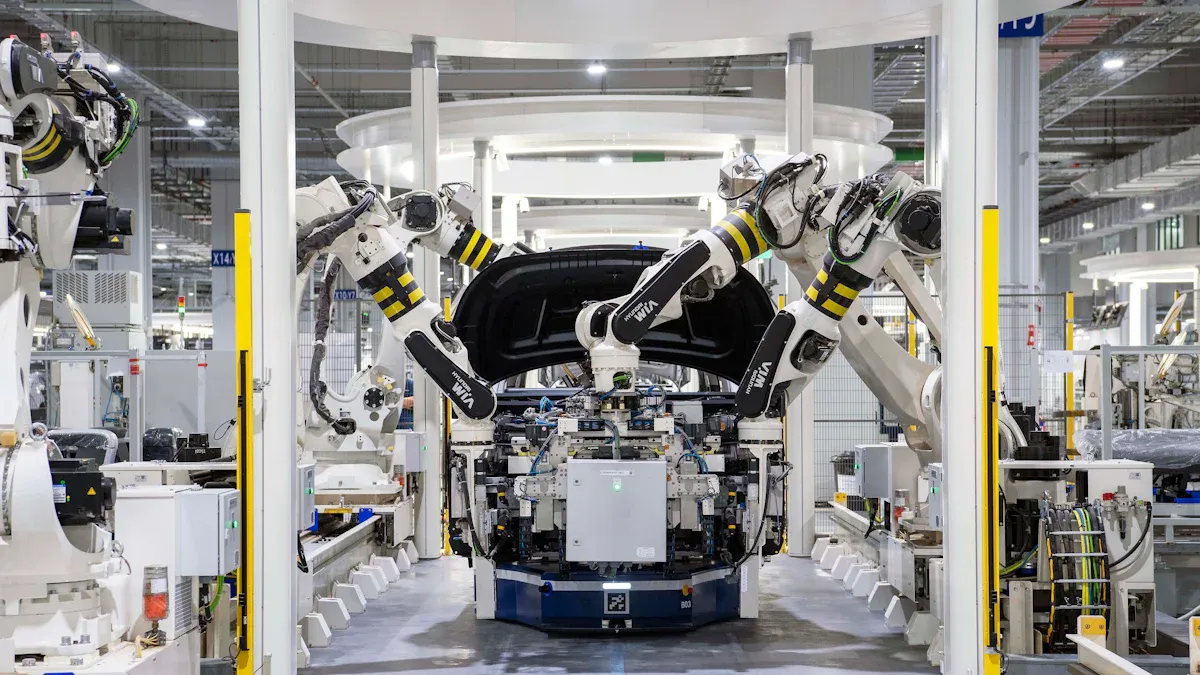
You gain a strong advantage when you invest in high-precision die casting equipment. Modern machines use advanced controls to manage temperature, pressure, and injection speed. These controls help you create parts with tight tolerances and smooth surfaces. You can produce complex shapes that meet strict industry standards.
Many Chinese OEM metal processors use multi-slide die casting machines. These machines allow you to make intricate parts in one cycle. You reduce the need for secondary machining. You also save time and lower costs. Some equipment uses servo motors for better accuracy. You can adjust settings quickly to match different product requirements.
Note: Regular maintenance of your die casting machines keeps them running at peak performance. You avoid costly downtime and ensure consistent quality.
Automation and Robotics Integration
You boost productivity and precision when you add automation and robotics to your production line. Robots can handle repetitive tasks like loading and unloading molds. They work faster than humans and do not get tired. You reduce the risk of errors and improve workplace safety.
You can use automated systems for trimming, deburring, and quality checks. These systems help you keep every part within specification. You also free up your skilled workers for more complex jobs. Many factories use collaborative robots, or “cobots,” that work safely alongside people.
Here are some benefits of automation in die casting:
- Faster cycle times
- Lower labor costs
- Fewer defects
- Improved consistency
Tip: Start with one automated process. Measure the results. Then expand automation to other areas for greater impact.
Process Monitoring and Real-Time Data Analytics
You ensure high precision by monitoring your die casting process in real time. Sensors collect data on temperature, pressure, and cycle time. You see this information on digital dashboards. If a problem occurs, you get alerts right away. You can fix issues before they affect product quality.
Real-time data analytics help you spot trends and make better decisions. You can track machine performance and predict when maintenance is needed. You also use data to improve your process over time.
| Key Metrics You Should Monitor | Why It Matters |
|---|---|
| Mold temperature | Prevents defects |
| Injection pressure | Ensures part consistency |
| Cycle time | Improves efficiency |
| Scrap rate | Reduces waste and cost |
You stay competitive when you use data to drive improvements. You deliver high-quality parts at lower costs and meet your customers’ demands with confidence.
Material Selection and Sourcing Strategies in OEM Metal Fabrication
Choosing Cost-Effective Alloys
You make a big impact on your project’s cost and quality when you select the right alloys. Aluminum and zinc are popular choices in OEM metal fabrication because they offer a good balance of strength, weight, and price. You can also choose magnesium for lightweight parts or copper for better conductivity. Each alloy has its own benefits and challenges. You should match the alloy to your product’s needs and your budget. When you pick cost-effective alloys, you keep your project on track and avoid expensive surprises.
Tip: Always check the latest market prices for metals. Prices can change quickly, so staying informed helps you make smart decisions.
Supplier Partnerships and Bulk Purchasing
You save money and improve reliability when you build strong partnerships with your suppliers. Trusted suppliers give you better prices and faster delivery. You can also get help with technical questions or special requests. When you buy materials in bulk, you lower your costs even more. Many Chinese OEM metal processors use group purchasing to get discounts on large orders.
Here are some benefits of bulk purchasing:
- Lower unit prices
- Fewer delivery delays
- Better quality control
You should review your supplier agreements often. This helps you keep your supply chain strong and flexible.
Material Traceability and Quality Assurance
You protect your reputation by tracking every batch of material you use. Good traceability means you know where your metals come from and how they move through your factory. You can use barcodes or digital records to follow each shipment. This makes it easy to find problems and fix them fast.
| Traceability Step | Why It Matters |
|---|---|
| Batch labeling | Prevents mix-ups |
| Digital tracking | Speeds up recalls |
| Quality checks | Ensures product safety |
You should set up regular quality checks at every stage. This keeps your products safe and your customers happy.
Quality Control Systems and Precision Assurance
In-Process Inspection and Testing
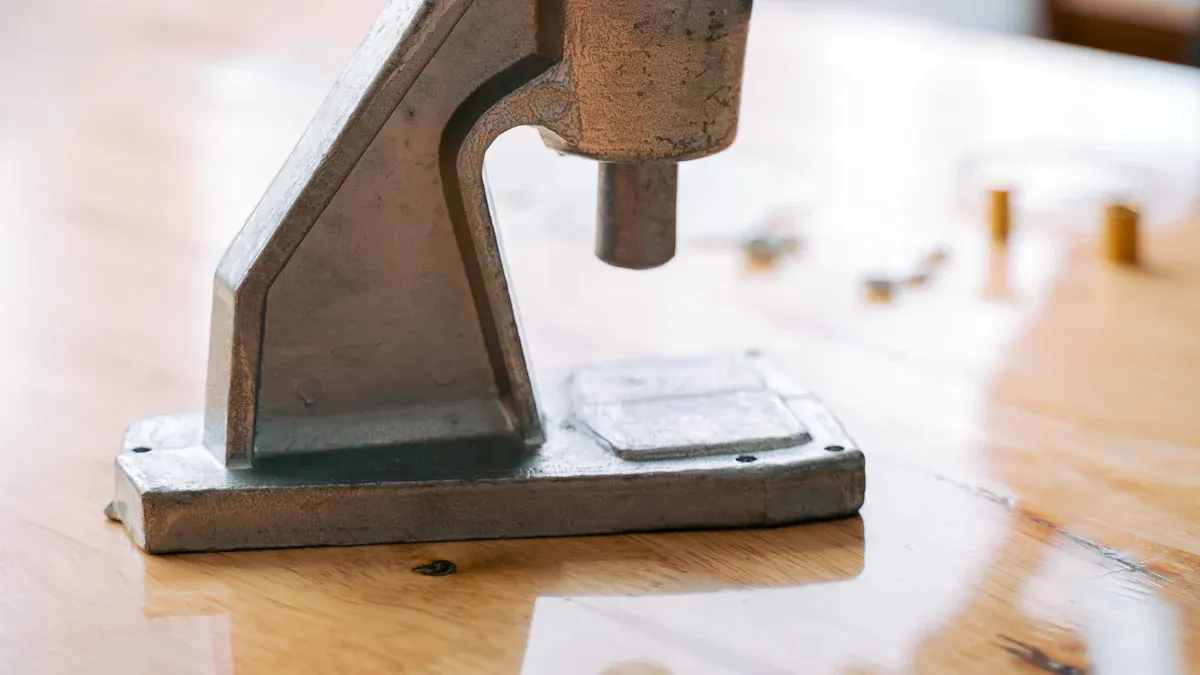
You maintain high standards in die casting by using in-process inspection and testing. You check parts during production, not just at the end. This approach helps you catch defects early. You use tools like calipers, gauges, and coordinate measuring machines (CMMs) to measure critical dimensions. You also perform visual checks for surface flaws or incomplete fills. When you find a problem, you can stop the line and fix it right away. This method saves you time and reduces waste.
Tip: Train your team to spot defects quickly. Skilled workers help you keep quality high at every step.
Statistical Process Control (SPC)
You use Statistical Process Control (SPC) to monitor your production process. SPC helps you track data and spot trends before they become problems. You collect measurements from each batch and plot them on control charts. These charts show you if your process stays within set limits. If you see a trend moving out of control, you can act fast to correct it.
Here are some key benefits of SPC:
- Early detection of process shifts
- Reduced scrap and rework
- Better consistency in finished parts
You build trust with your customers when you use data to prove your process stays stable.
Certification and Compliance Standards
You show your commitment to quality by meeting industry certifications and compliance standards. Many customers look for ISO 9001 or IATF 16949 certification. These standards require you to document your processes and keep records of inspections. You also follow safety and environmental rules, such as RoHS or REACH, when needed.
| Certification | What It Proves |
|---|---|
| ISO 9001 | Strong quality management |
| IATF 16949 | Automotive industry standards |
| RoHS/REACH | Environmental compliance |
You give your clients peace of mind when you meet these standards. You also open doors to new markets and bigger projects.
Cost Management and Supply Chain Optimization in OEM Metal Fabrication
Lean Manufacturing Practices
You can cut costs and boost efficiency by using lean manufacturing practices. Lean focuses on removing waste from every step of your process. You look for ways to reduce extra movement, waiting time, and overproduction. Many factories use tools like 5S to keep work areas clean and organized. You also use value stream mapping to see where you can improve. When you follow lean methods, you make your OEM metal fabrication process faster and more reliable.
Tip: Start with small changes. Track your results and build on your success.
Inventory and Lead Time Reduction
You save money when you keep your inventory low and shorten lead times. You order materials only when you need them. This approach, called just-in-time (JIT), helps you avoid extra storage costs. You also work with suppliers who can deliver quickly. Fast delivery means you can respond to customer orders faster. You use software to track inventory and plan orders. This keeps your production line moving without delays.
Here is a simple table to show the benefits:
| Practice | Benefit |
|---|---|
| JIT Ordering | Lower storage costs |
| Fast Delivery | Quicker response |
| Inventory Tracking | Fewer shortages |
Global Benchmarking and Continuous Improvement
You stay ahead by comparing your performance to top companies worldwide. This process is called benchmarking. You look at quality, cost, and delivery times. You set goals to match or beat the best in the industry. You also use continuous improvement, or Kaizen, to make small changes every day. Your team shares ideas and solves problems together. Over time, you build a culture that values progress and excellence.
Remember: Even small improvements can lead to big savings over time.
Case Studies and Real-World Examples
Automotive Component Production
You can see the impact of advanced die casting in the automotive industry. Many Chinese OEMs produce engine housings, transmission cases, and structural brackets for global car brands. You benefit from their use of high-pressure die casting machines, which create parts with tight tolerances and smooth finishes. These factories often use automated lines to keep production fast and consistent. You also gain from their strong quality control systems, which catch defects early and reduce waste.
Note: Leading automotive suppliers in China often hold IATF 16949 certification. This gives you confidence in their process and product quality.
Consumer Electronics Die Casting
You rely on die casting for the sleek frames and housings in smartphones, laptops, and tablets. Chinese OEMs use multi-slide die casting machines to make thin, complex parts with precise details. You get lightweight, durable components that fit perfectly in your devices. These factories use real-time data monitoring to keep every batch within strict limits. You also benefit from their ability to scale up quickly for large orders.
Here are some advantages you receive:
- Consistent part quality
- Fast turnaround for new models
- Cost savings from bulk production
Medical Device Components
You trust Chinese OEMs to deliver high-precision parts for medical devices. They produce items like pump housings, surgical tool handles, and diagnostic equipment covers. You see their commitment to quality through ISO 13485 certification and strict material traceability. These factories use advanced inspection tools to check every part. You get safe, reliable components that meet global health standards.
| Medical Device Part | Die Casting Benefit |
|---|---|
| Pump housing | Leak-proof, strong |
| Surgical tool handle | Smooth, ergonomic finish |
| Equipment cover | Lightweight, precise fit |
Tip: Always ask for certification and test reports when you source medical device parts. This ensures you meet safety and compliance needs.
You achieve success in OEM metal fabrication when you use advanced technology, strong supplier relationships, and strict quality systems. You improve your results by focusing on design optimization, automation, and continuous improvement. Cross-functional teamwork helps you solve problems quickly. When you invest in new tools and review your process often, you keep your die casting operation competitive and precise.
FAQ
What factors help you achieve low-cost die casting in China?
You benefit from advanced automation, bulk material purchasing, and efficient design. These factors lower labor and material costs. You also save money by working with experienced suppliers who optimize every step of production.
How do you ensure high precision in die cast parts?
You use modern die casting machines and real-time monitoring. You also rely on strict quality checks and advanced measurement tools. These steps help you meet tight tolerances and deliver consistent results.
Can you customize die cast parts for special projects?
You can request custom shapes, sizes, and finishes. Chinese OEMs use CAD/CAM software to match your exact needs. You get prototypes for review before mass production starts.
What certifications should you look for in a Chinese OEM metal processor?
You should check for ISO 9001, IATF 16949, or ISO 13485 certifications. These prove strong quality management and compliance with industry standards.
How do you handle quality issues during production?
You catch problems early with in-process inspections and data tracking. If you find a defect, you stop production and fix it right away. This approach keeps your products safe and reliable.
Post time: Jul-28-2025