
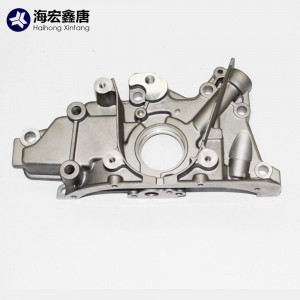
Motorcycles generate significant heat during operation, making effective heat dissipation crucial for performance and safety. Die casting aluminum motorcycle housing offers a reliable solution by combining excellent thermal conductivity with a lightweight structure. This process, often employed by a Metal Die Casting Parts Foundry, allows for precise manufacturing of components like the engine cover. Advanced methods, such as Centrifugal Metal Die Casting, enhance durability while maintaining efficiency. The inclusion of OEM service die casting ensures customization, addressing specific needs for improved functionality and aesthetics.
Key Takeaways
- Aluminum die-cast motorcycle parts help cool engines and boost safety.
- Aluminum spreads heat well, stopping engines from getting too hot.
- Its light weight makes motorcycles easier to handle and saves fuel.
- Die casting shapes parts accurately, improving airflow and engine cooling.
- Using aluminum is eco-friendly since it can be recycled easily.
The Problem of Heat Dissipation in Motorcycles
Why heat dissipation is critical for motorcycle performance and safety
Motorcycles rely on efficient heat management to maintain optimal engine performance. Excessive heat can reduce engine efficiency, leading to power loss and increased fuel consumption. Proper heat dissipation prevents overheating, which can damage critical components like pistons, cylinders, and valves. By controlling temperature, motorcycles achieve consistent performance and extend the lifespan of their engines.
Safety is another crucial factor. Overheated engines can cause sudden breakdowns, putting riders at risk. High temperatures may also affect surrounding parts, such as wiring and fuel systems, increasing the likelihood of accidents. Effective heat dissipation ensures that motorcycles operate safely under various conditions, including long rides and high-speed travel.
Common challenges in managing heat in motorcycle engines and components
Motorcycle engines generate heat due to combustion and friction. Compact designs often limit airflow, making it harder to cool the engine. Air-cooled systems, commonly used in motorcycles, depend on external airflow, which may be insufficient in hot climates or during slow-speed rides. Liquid-cooled systems offer better heat management but add weight and complexity to the motorcycle design.
Material selection plays a significant role in heat management. Some materials used in engine components lack the thermal conductivity needed to transfer heat efficiently. This limitation can lead to hotspots, where heat accumulates and causes uneven cooling. Additionally, the design of engine covers and housings may restrict heat dissipation, further complicating the issue.
Die casting aluminum motorcycle housing addresses these challenges by combining excellent thermal conductivity with lightweight properties. This solution enhances heat transfer while maintaining the structural integrity of the motorcycle. Manufacturers use advanced techniques to create precise designs that improve airflow and cooling efficiency, ensuring reliable performance in demanding conditions.
Why Aluminum is Ideal for Heat Dissipation
Thermal conductivity properties of aluminum
Aluminum stands out as an excellent material for heat dissipation due to its high thermal conductivity. It transfers heat efficiently, ensuring that motorcycle engines remain cool during operation. With a thermal conductivity of 237 W/m·K, aluminum demonstrates effective heat transfer capabilities. While copper surpasses aluminum with a conductivity of 398 W/m·K, aluminum’s lightweight nature and affordability make it a preferred choice for motorcycle applications. Its ability to distribute heat evenly prevents hotspots, which can damage engine components. This property ensures consistent cooling, even under demanding conditions like high-speed travel or extended rides.
Lightweight and strength advantages of aluminum in motorcycle design
Aluminum’s lightweight nature offers significant benefits for motorcycle design. It is approximately one-third the density of steel, making it an ideal material for reducing overall weight. This reduction enhances fuel efficiency and improves handling, allowing riders to maneuver their motorcycles with greater ease.
Several engineering studies highlight aluminum’s strength-to-weight ratio, which contributes to its durability in automotive applications. Its passive oxide layer provides natural corrosion resistance, ensuring long-term reliability. Additionally, aluminum’s high ductility and malleability enable precision machining. Manufacturers can create complex designs with minimal deformation, optimizing both functionality and aesthetics.
Other advantages include:
- Impact strength ranging from 1.25 to 2.0 J, ensuring resilience under stress.
- Density values between 2313.14 to 2746.41 kg/m³, contributing to lightweight construction.
- Thermal conductivity values between 88.35 to 292 W/m·°C, supporting efficient heat management.
These properties make aluminum a versatile material for motorcycle housing, combining strength, durability, and effective heat dissipation.
The Role of Die Casting in Aluminum Motorcycle Housing
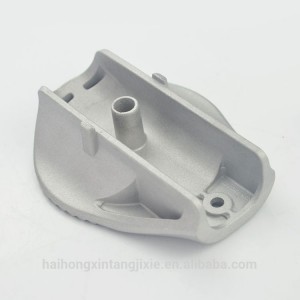
What is die casting and how it works
Die casting is a manufacturing process that produces precise and durable components by injecting molten metal into a mold under high pressure. This method is widely used in creating motorcycle housings due to its efficiency and ability to produce complex shapes. The process involves several key steps:
- Mold Design: Engineers design a die, typically made from steel or aluminum, to withstand extreme temperatures and pressures.
- Metal Preparation: The chosen metal, often an aluminum alloy, is melted in a furnace and prepared for casting.
- Injection Process: The molten metal is injected into the mold cavity at high pressure, ensuring it fills every detail of the design.
- Casting Process: The metal cools and solidifies within the mold. Once hardened, the mold opens, and the component is ejected.
- Finishing Process: Surface treatments, such as polishing or powder coating, enhance the part’s durability and appearance.
This process ensures that die casting aluminum motorcycle housing components meet high standards of precision and quality. The ability to create intricate designs with minimal waste makes die casting a preferred choice in the automotive industry.
How die casting enhances the heat dissipation properties of aluminum
Die casting improves the heat dissipation capabilities of aluminum by optimizing its thermal conductivity during the manufacturing process. Studies show that die casting achieves better heat transfer compared to traditional casting methods. For example, experiments measuring die temperatures at different cooling water flow rates reveal that higher flow rates (e.g., 5 L/min) result in lower die temperatures. This indicates superior heat dissipation during the solidification stage.
The high-pressure injection used in die casting ensures a uniform and dense structure in the aluminum. This uniformity enhances the material’s ability to transfer heat efficiently, preventing hotspots that could damage motorcycle components. Additionally, the smooth surfaces achieved through die casting reduce thermal resistance, further improving heat management. These advantages make die casting aluminum motorcycle housing an effective solution for managing engine heat.
Design flexibility and precision offered by die casting for motorcycle housing
Die casting offers unparalleled design flexibility and precision, enabling manufacturers to create motorcycle housings that optimize performance and durability. Advanced technologies, such as 3D printing, are often integrated into the die casting process to produce intricate and customized designs. For instance, case studies highlight the use of voxeljet’s 3D printing technology to create electric motor housings with enhanced precision.
This flexibility allows manufacturers to tailor components to specific requirements, such as improving airflow for better cooling or reducing weight for enhanced fuel efficiency. The precision of die casting ensures minimal deformation, even in complex designs. This capability is particularly beneficial for applications like E-Motorcycle battery housings, where optimized designs contribute to longer battery life and improved thermal management.
By combining design versatility with high accuracy, die casting aluminum motorcycle housing components meet the demands of modern motorcycle engineering. This process not only enhances functionality but also ensures aesthetic appeal, making it a comprehensive solution for the automotive industry.
Benefits of Die-Cast Aluminum Motorcycle Housing
Improved engine performance and longevity
Die-cast aluminum motorcycle housing significantly enhances engine performance by improving heat dissipation. Aluminum’s high thermal conductivity ensures that heat generated during engine operation is quickly transferred away from critical components. This prevents overheating, which can lead to reduced engine efficiency and damage over time. By maintaining optimal operating temperatures, the engine performs consistently, even under demanding conditions such as long-distance travel or high-speed riding.
The durability of die-cast aluminum also contributes to engine longevity. The high-pressure die casting process creates dense and uniform structures, reducing the likelihood of defects such as cracks or weak points. This structural integrity ensures that the housing withstands the stresses of daily use, including exposure to vibrations and extreme temperatures. As a result, motorcycles equipped with die-cast aluminum housings experience fewer mechanical failures, extending the lifespan of both the engine and the vehicle.
Enhanced safety and reliability
Die-cast aluminum motorcycle housing improves safety by ensuring the reliability of engine components. Effective heat dissipation prevents overheating, which can cause sudden engine failures and increase the risk of accidents. Additionally, the robust construction of die-cast aluminum housings protects internal components from external damage, such as impacts or debris, further enhancing rider safety.
Manufacturers employ rigorous testing methods to ensure the reliability of die-cast aluminum components. These tests include:
| Inspection Technique | Purpose |
|---|---|
| X-ray Imaging | Detects internal defects such as porosity and inclusions, ensuring internal integrity. |
| Ultrasonic Testing | Identifies flaws like voids and cracks, providing data on the internal condition of castings. |
| Adherence to Standards | Ensures consistent quality and reliability by following industry specifications. |
These inspections guarantee that each component meets high safety standards, providing riders with peace of mind. The combination of advanced manufacturing techniques and thorough quality control makes die-cast aluminum motorcycle housing a reliable choice for enhancing safety on the road.
Cost-effectiveness and sustainability
Die-cast aluminum motorcycle housing offers a cost-effective solution for manufacturers and riders alike. The die casting process allows for the mass production of complex components with minimal waste, reducing manufacturing costs. Aluminum’s lightweight nature also contributes to fuel efficiency, lowering operational costs for riders over time.
In addition to being economical, die-cast aluminum is an environmentally friendly choice. Aluminum is highly recyclable, and the die casting process generates less waste compared to other manufacturing methods. Recycled aluminum retains its original properties, making it a sustainable material for repeated use. By choosing die-cast aluminum components, manufacturers support eco-friendly practices while delivering high-quality products.
The combination of affordability, efficiency, and sustainability makes die-cast aluminum motorcycle housing an ideal solution for modern motorcycles. It not only reduces costs but also aligns with global efforts to minimize environmental impact.
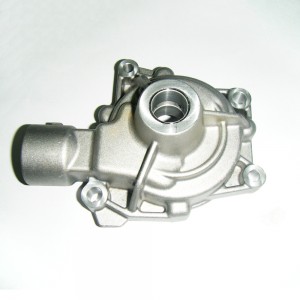
HHXT’s Die Casting Aluminum Motorcycle Housing Heat Sink Engine Cover
Overview of HHXT and its manufacturing process
HHXT, a prominent manufacturer based in Zhejiang, China, specializes in producing high-quality die-cast components for the automotive industry. The company employs advanced high-pressure die casting techniques to create durable and precise products. This process involves injecting molten aluminum alloys into custom molds under extreme pressure. The result is a dense, uniform structure that enhances both strength and thermal conductivity.
HHXT’s manufacturing facilities feature cutting-edge equipment, including 39 CNC machining centers and 15 numerical control machines. These tools enable the production of intricate designs with minimal deformation. Each product undergoes over six rigorous quality control tests, ensuring it meets international standards such as ISO9001, SGS, and IATF 16949. This meticulous approach guarantees reliability and consistency in every component.
Key features of the product, including material quality and customization options
The Die Casting Aluminum Motorcycle Housing Heat Sink Engine Cover by HHXT stands out for its exceptional material quality. It is crafted from premium aluminum alloys like ADC1, ADC12, A380, and AlSi9Cu3. These materials offer excellent thermal conductivity, corrosion resistance, and durability. The lightweight nature of aluminum also contributes to improved motorcycle performance.
Customization is a key advantage of this product. Customers can specify dimensions, colors, and surface treatments to suit their needs. Available finishes include powder coating, anodizing, and sandblasting, which enhance both aesthetics and wear resistance. HHXT also provides OEM and ODM services, allowing clients to submit original samples or 2D/3D drawings for tailored production.
Advantages of HHXT’s product in addressing heat dissipation challenges
HHXT’s die casting aluminum motorcycle housing effectively addresses heat dissipation challenges. The high thermal conductivity of aluminum ensures efficient heat transfer, preventing engine overheating. The precision of the die casting process creates smooth surfaces that reduce thermal resistance, further enhancing cooling efficiency.
The product’s lightweight design minimizes the overall weight of the motorcycle, improving fuel efficiency and handling. Its robust construction withstands vibrations and extreme temperatures, ensuring long-term reliability. Customization options allow for optimized designs that improve airflow and cooling performance. These features make HHXT’s engine cover a reliable solution for managing heat in motorcycle engines.
Die casting aluminum motorcycle housing provides an effective solution for managing heat dissipation in motorcycles. Its thermal conductivity, lightweight design, and durability enhance engine performance and safety. HHXT’s Die Casting Aluminum Motorcycle Housing Heat Sink Engine Cover showcases these advantages through its high-quality materials and advanced manufacturing techniques.
By adopting die-cast aluminum solutions, manufacturers and riders can achieve optimal motorcycle performance. This approach ensures engines remain reliable and efficient, even under challenging conditions. The combination of innovation and practicality makes die-cast aluminum a preferred choice for modern motorcycles.
FAQ
What makes die-cast aluminum better for motorcycle housing than other materials?
Die-cast aluminum offers high thermal conductivity, lightweight properties, and excellent durability. These features improve heat dissipation, reduce motorcycle weight, and enhance engine performance. Its corrosion resistance and ability to withstand extreme conditions make it a superior choice for motorcycle housing.
How does die casting improve the precision of motorcycle components?
Die casting uses high-pressure injection to create components with intricate designs and smooth surfaces. This process ensures uniformity and reduces defects like cracks or voids. Manufacturers achieve high precision, which enhances the performance and reliability of motorcycle parts.
Can die-cast aluminum motorcycle housing be customized?
Yes, manufacturers like HHXT offer customization options. Customers can specify dimensions, colors, and surface treatments. Options like powder coating, anodizing, and sandblasting improve aesthetics and durability. OEM and ODM services allow tailored production based on original samples or 2D/3D drawings.
Is die-cast aluminum environmentally friendly?
Aluminum is highly recyclable, retaining its properties even after recycling. The die casting process minimizes waste, making it an eco-friendly manufacturing method. Choosing die-cast aluminum supports sustainability while delivering high-quality motorcycle components.
How does HHXT ensure the quality of its die-cast aluminum products?
HHXT conducts over six quality control tests on each product. Techniques like X-ray imaging and ultrasonic testing detect internal defects. The company adheres to international standards, including ISO9001 and IATF 16949, ensuring reliability and consistency in every component.
By:haihong
email:daphne@haihongxintang.com
email:haihong@haihongxintang.com
Phone:
Sales: 0086-134 8641 8015
Support: 0086-574 8669 1714
Post time: Apr-21-2025