
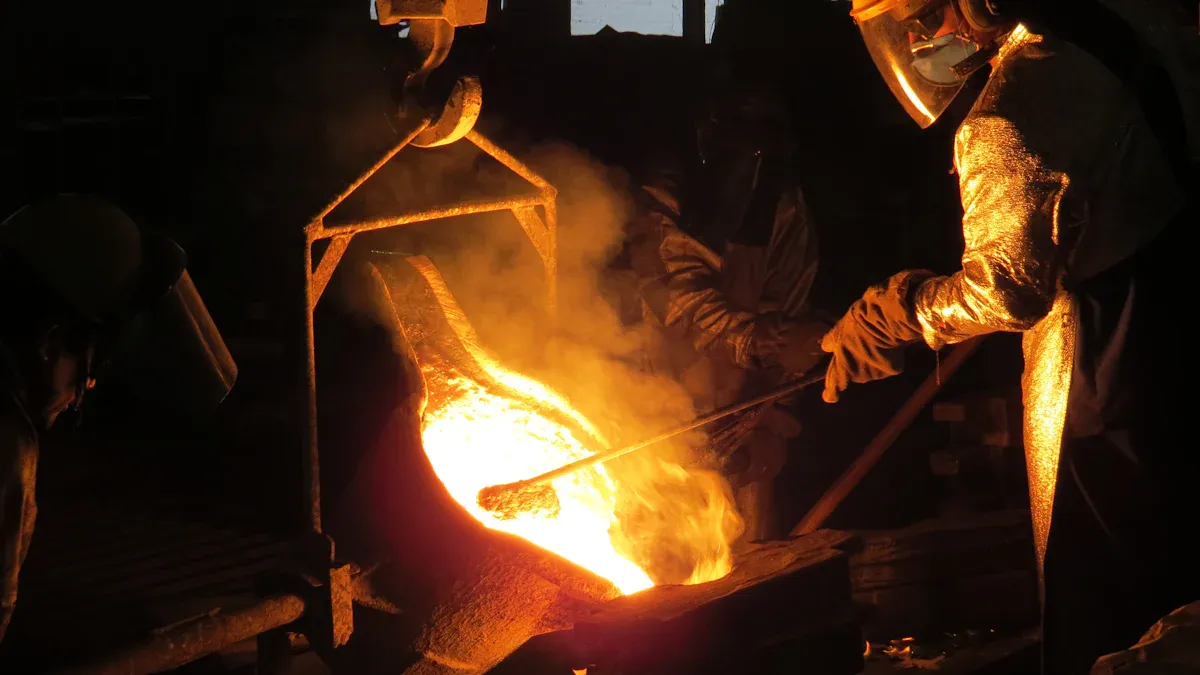
You rely on cast aluminum components for high-performance results in industries such as telecommunication. Reliable suppliers use advanced technology and strict quality control to deliver parts you can trust. Their expertise ensures that every product meets demanding standards and supports your business success.
Key Takeaways
- Reliable cast aluminum suppliers use advanced technology and strict quality checks to deliver parts that fit perfectly and last longer.
- They control defects like porosity through smart design, careful process monitoring, and thorough testing to ensure strong, reliable components.
- Certifications and continuous improvement guarantee consistent quality, helping you get dependable parts that meet industry standards every time.
Cast Aluminum Quality Control Practices

Precision in Dimensional Tolerances
You demand parts that fit perfectly every time. Reliable cast aluminum die casting suppliers achieve this by focusing on dimensional accuracy from the start. They use advanced measuring tools and automated systems to check every critical dimension. This ensures that each casting matches your specifications and fits seamlessly into your assembly.
- Suppliers implement quality management systems like ISO9001 and TS16949 to standardize processes.
- They monitor mold cavity temperature to maintain proper casting shape.
- Professional teams of engineers and inspectors oversee every stage, from design to final inspection.
By maintaining tight tolerances, you receive cast aluminum components that reduce assembly time and minimize the risk of rework.
Control of Porosity and Defects
Porosity can weaken cast aluminum parts and lead to failures in demanding applications. Leading suppliers use a combination of design, process control, and inspection to keep porosity and other defects under control.
Tip: Non-destructive testing methods such as X-ray inspection and ultrasonic testing allow you to detect internal porosity without damaging the casting.
Here is a summary of effective methods for detecting and controlling porosity:
| Method Category | Techniques & Tools | Benefit/Outcome |
|---|---|---|
| Detection Methods | X-ray inspection, Ultrasonic testing | Detect internal porosity without damaging castings |
| Mold and Gating Design | Optimized gate and riser placement, smooth metal flow | Prevent air entrapment and shrinkage porosity |
| Process Control & Monitoring | Maintain melt/mold temperatures, injection pressure | Prevent gas absorption and shrinkage defects |
| Alloy Treatment | Degassing with inert gases, refining processes | Remove dissolved gases, minimize gas porosity |
| Advanced Casting Techniques | Vacuum-assisted die casting, squeeze casting | Produce denser, more uniform structures |
You benefit from these practices through stronger, more reliable cast aluminum parts. Real-world results include higher tensile strength, lower scrap rates, and significant cost savings.
Rigorous Metallurgical Testing
You need assurance that every cast aluminum component meets strict industry standards. Suppliers use a range of metallurgical tests to verify quality and performance.
- Chemical composition testing with X-ray fluorescence (XRF) spectrometry confirms alloy specifications.
- Mechanical properties testing, such as hardness and tensile tests, ensures structural integrity.
- Dimensional inspections with precise measuring tools verify that each part meets your requirements.
- Non-destructive testing methods, including dye penetrant and radiographic inspection, detect surface and internal defects.
These tests guarantee that your cast aluminum parts deliver consistent performance in critical applications, from automotive to aerospace.
Advanced Technology in Cast Aluminum Die Casting
CNC Machining for High Accuracy
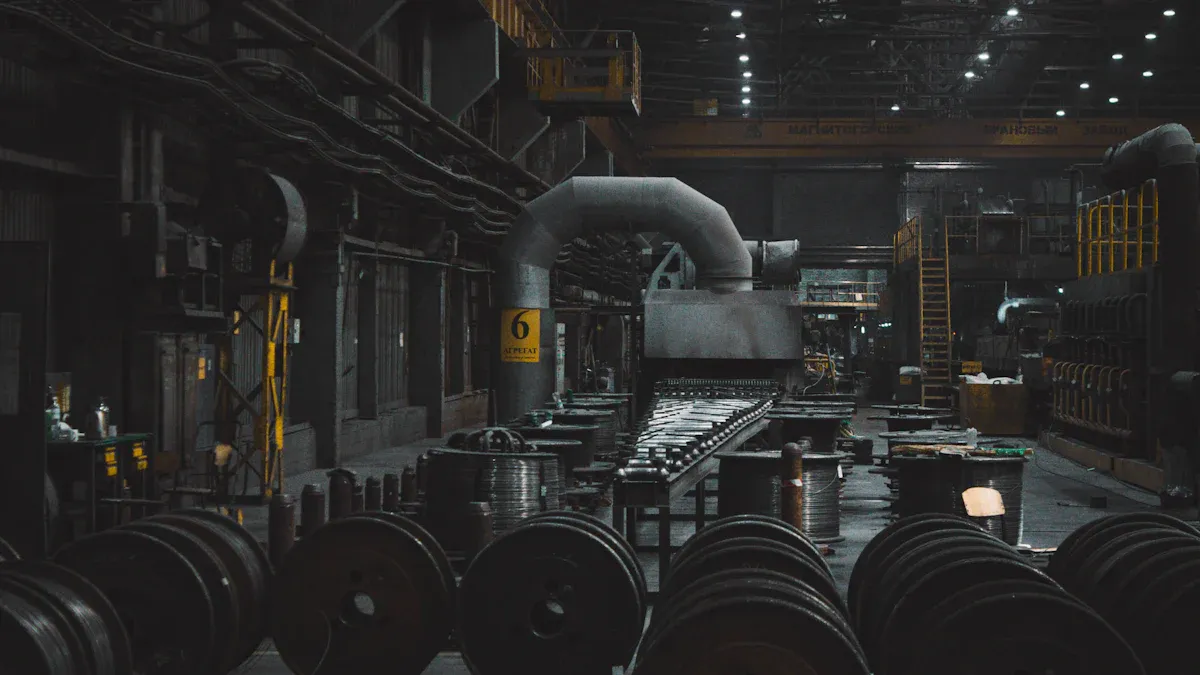
You expect precision in every component. CNC machining delivers this by using computer-controlled tools to shape aluminum parts with exceptional accuracy. This process removes material from solid blocks, achieving tight tolerances and complex shapes that casting alone cannot provide. Industries such as automotive and aerospace rely on CNC machining for parts that demand high detail and repeatability. You benefit from:
- Consistent, repeatable results for every batch.
- The ability to create intricate features and fine details.
- Higher accuracy compared to traditional casting methods.
CNC machining ensures your cast aluminum parts meet the most demanding specifications.
CMM Inspection for Quality Verification
You need assurance that every part matches your design. Coordinate Measuring Machine (CMM) inspection provides this by measuring each component against CAD models or engineering drawings. CMM technology checks dimensional accuracy, repeatability, and traceability. It supports in-process inspection and final part qualification, helping you avoid costly rework. Key advantages include:
- Enhanced accuracy, often within ±1 to ±5 microns.
- Detailed inspection reports for traceability.
- Early detection of deviations, reducing scrap and improving efficiency.
CMM inspection helps you maintain high-quality standards in cast aluminum manufacturing.
Simulation Software for Process Optimization
You want to optimize your production process and reduce defects. Simulation software models the entire die casting process, predicting issues like porosity and cold separation before production begins. By adjusting parameters such as mold temperature and injection speed, you achieve defect-free castings and improved mechanical properties. Simulation software also shortens development cycles and lowers costs. For example, optimized pouring temperatures and injection speeds can reduce shrinkage porosity by over 50%. This technology ensures your cast aluminum components deliver reliable performance every time.
Cast Aluminum Industry Certifications and Standards
ISO Certification and Quality Management Systems
You want assurance that your supplier follows strict quality guidelines. ISO certification provides this confidence. To achieve ISO 9001:2015 and IATF 16949 certification, a company must:
- Maintain a Quality Management System (QMS) that meets international standards.
- Register the management system with a recognized body, such as Intertek.
- Commit to delivering castings that meet or exceed your requirements.
- Ship products on time and follow all shipping instructions.
- Continually improve processes to boost customer satisfaction and company success.
These steps ensure you receive reliable cast aluminum parts every time.
Compliance with ASTM and Other Industry Standards
You expect your components to meet global benchmarks. Suppliers who comply with ASTM and other industry standards deliver consistent results. These standards cover material properties, testing methods, and performance requirements. By following them, your supplier guarantees that each part matches your expectations for strength, durability, and safety.
- Certifications such as ISO, IATF, and AS standards form the backbone of quality control.
- These certifications ensure traceability and accountability, which are vital for industries like automotive and aerospace.
- Adherence to standards goes beyond compliance. It creates a proactive system that prevents defects and builds your trust.
Ongoing Audits and Continuous Improvement
You benefit from a supplier who never stops improving. Regular audits check that processes stay effective and up to date. Suppliers use multi-stage quality checks, including X-ray and ultrasonic tests, CMM inspections, and mechanical testing. This approach leads to high-quality, reliable cast aluminum components. Continuous improvement keeps your products at the forefront of performance and reliability.
Expertise in Cast Aluminum Alloy Selection and Mold Design
Selecting Optimal Aluminum Alloys
You need the right alloy to achieve the best performance for your application. Reliable suppliers help you choose from a wide range of aluminum alloys. Each alloy offers unique properties, such as strength, corrosion resistance, and thermal conductivity. You benefit from expert guidance that matches the alloy to your product’s requirements. For example, you may need an alloy with high strength for automotive parts or one with excellent conductivity for electronics. Your supplier’s experience ensures you get the most suitable material for your cast aluminum components.
Mold Design for Consistent Results
You want every part to look and perform the same. Skilled engineers design molds that deliver consistent results, batch after batch. They use advanced software to create precise mold cavities. This process controls metal flow and cooling rates, which reduces defects and improves surface finish. You receive parts with uniform dimensions and fewer imperfections. A well-designed mold also extends tool life and lowers production costs.
Tip: Ask your supplier about their mold maintenance program. Regular maintenance keeps molds in top condition and ensures long-term quality.
Process Optimization for Repeatable Quality
You expect every order to meet your standards. Suppliers use process optimization to make sure each casting meets strict quality targets. They monitor key parameters, such as temperature and pressure, during production. Real-time data helps them adjust settings quickly if needed. This approach reduces variation and increases yield. You gain confidence that your cast aluminum parts will perform reliably in every application.
Real-World Cast Aluminum Quality Success Stories
Case Study: Automotive Component Production
You need reliable parts for vehicles that perform under pressure. A leading automotive manufacturer partnered with a trusted supplier to produce high-precision transmission housings. The supplier used advanced die casting machines and strict quality control at every stage. Engineers selected the best aluminum alloy for strength and durability. CNC machining refined each part to exact specifications. CMM inspection verified every dimension. The result? The manufacturer received cast aluminum components that fit perfectly and passed all safety tests. Production delays dropped, and warranty claims decreased. You can see how a focus on quality leads to better performance and customer satisfaction.
Note: Consistent quality in automotive parts helps you build a reputation for safety and reliability.
Case Study: Electronics Housing Manufacturing
You want electronics housings that protect sensitive components and look great. An electronics company chose a supplier with expertise in mold design and process optimization. The team designed molds for uniform wall thickness and smooth surfaces. Simulation software predicted and prevented defects before production started. The supplier used real-time monitoring to keep every casting within tight tolerances. The finished cast aluminum housings offered excellent heat dissipation and a flawless finish. The company reduced assembly time and improved product reliability. You benefit from a supplier who understands your needs and delivers consistent results.
Choosing a reliable die casting supplier sets you up for long-term success. You gain access to full-service capabilities, advanced simulation tools, and expert guidance.
- Streamlined logistics and reduced lead times
- Ongoing support from design to production
- Consistent quality for high-volume orders
FAQ
What quality certifications should you look for in a cast aluminum die casting supplier?
You should look for ISO 9001 and IATF 16949 certifications. These show that your supplier follows strict quality management systems and industry standards.
How do you ensure consistent quality in high-volume orders?
- You benefit from automated inspection systems.
- You receive regular quality audits.
- You get real-time process monitoring for every batch.
Can you customize aluminum alloys for specific applications?
| Option | Benefit |
|---|---|
| Custom alloys | Meet unique requirements |
| Standard alloys | Ensure fast delivery |
You can request custom alloys to match your application needs.
Post time: Aug-08-2025